Author: Joy Farrell

  • A Disquieting Future: Review of a Thoughtful Short Story Collection

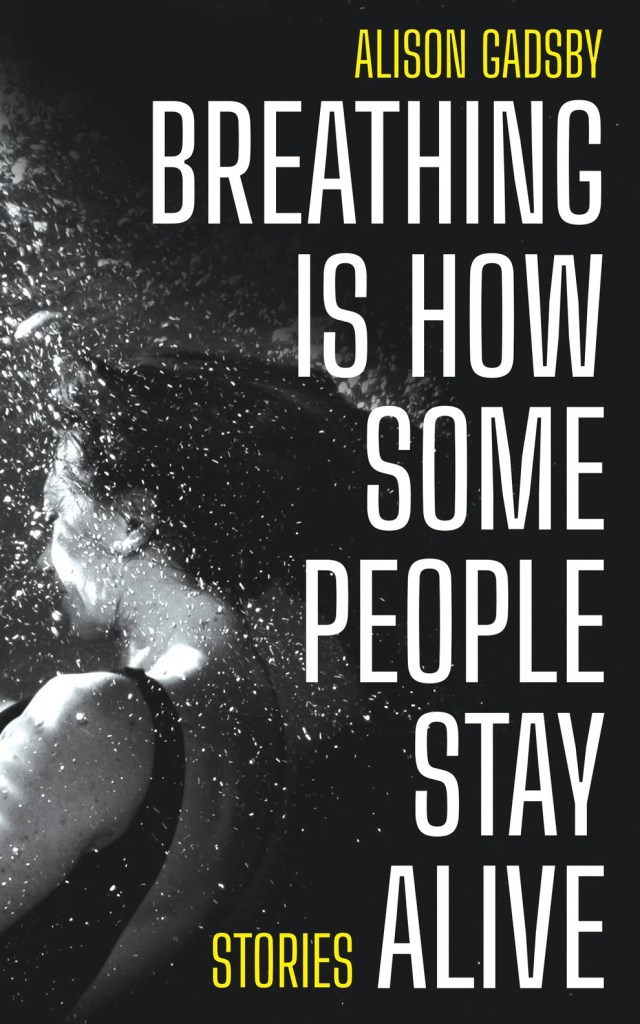
    Book cover of Alison Gadsby's Breathing is How Some People Stay Alive

    I was fortunate to read “Breathing is How Some People Stay Alive”, a collection of deeply visceral short stories by Canadian writer, Alison Gadsby. Futuristic and catastrophic, her writing is inexplicable and draws the reader through the unfamiliar to bear witness to the subtle acts of violence and their memory enacted upon women’s bodies, regardless of time or space.

    The wicked and plain madness of robots and pregnancy

    The collection begins with “The Deal with Roger”, an absorbing and disquieting exploration of a woman’s loneliness and her desperate climb out of a codependent and sometimes violent relationship. Gadsby subtly builds tension and a familiar world around Mirabel, she goes for weekly swims and has an overbearing father but there is something slightly off. The world advances and stays the same.

    Alison Gadsby truly excels at inviting us into the inner lives of women, not at their best or most achieved, but when their sexuality turns them to brutes and their apathy is intent on destroying all that is good around them. Anger and retributive violence are made available to women’s curiosity in “Breathing is How Some People Stay Alive”.

    “Swimming” is a story about the wicked and plain boring madness of early motherhood when time is lost and the ends of your body are connected to an infant or aching for it. Gadsby expertly weaves in the casual misogyny of the narrator’s father-in-law, her body and mind pulled in multiple directions by the men and boys that surround her. The outcome makes as much sense as it does not. It is like looking at something you think you know, but it has fallen into the water and the waves obscure its lines.

    The acts of violence are startling and ethereal, like in “The Going Rate of Grief”, where time is a manipulation if you try hard enough. The futuristic setting she has created, brick by innocuous brick is its own form of violent oppression and judgment. Each story is a weird, intricately woven experience in the unexpected.

    The future where human experience exists between lines of light and code.

    Who should read “Breathing is How Some People Stay Alive”

    Alison Gadsby’s “Breathing is How Some People Stay Alive” is for every woman and female aligned or assigned person who has stood at the edge of a precipice and imagined who they would push into it. It is for the readers who spread fire across the shiny surface of a conference room table when the men won’t let anyone else speak, for fear of being caught in their lies. It is for anyone who likes the weird and wonderful and imagines what it would be like to poke a jellyfish with their brother’s finger.

    There is realistic reference to sex and violence as well as the indignities and injustices of being alive: Cancer, infertility, alcohol and abuse. Dreams lost and found. Loneliness and the ecstatic experience of love. That is the gift of Gadsby’s writing in this collection. It is set in an automated future society with the same petty realities and fears of human experience.

    “Breathing is How Some People Stay Alive” is available for pre-order now, full publication by Guernica Editions in March 2026. To see more from Alison Gadsby, check out her website and follow her on IG!

    Special thanks to Guernica Editions for making the collection available to read on NetGalley!
  • All the White Friends I Couldn’t Keep: A Review and Reflections

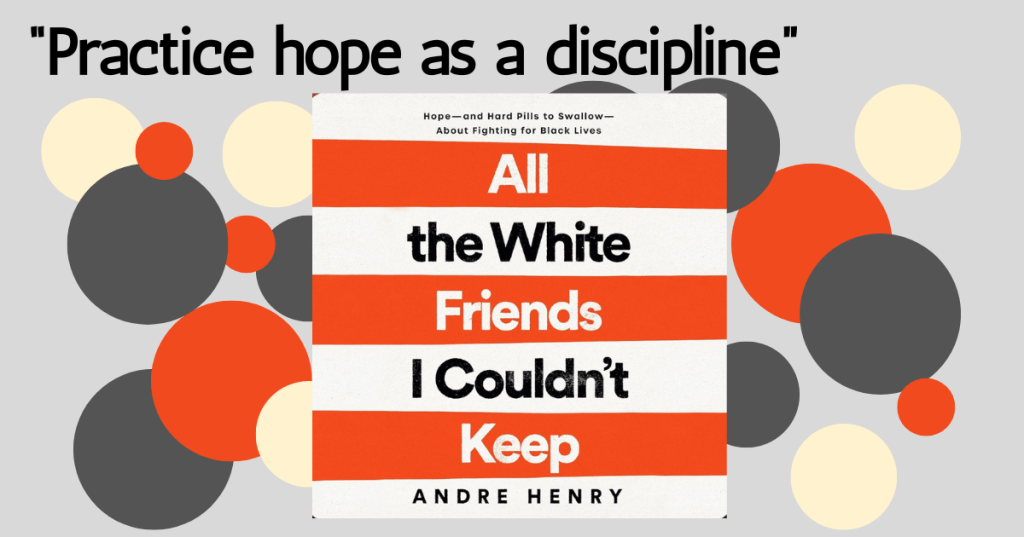
    I recently encountered “All the White Friends I Could Not Keep” by Andre Henry (I listened to the audiobook version he narrated). It is an uncomfortable, painful and necessary read as Henry explores race, activism, and the philosophy and action of nonviolent political protest and the growth he experienced during this journey. But it is also the story of the many painful ways his white loved ones chose to react to his awakening. 

    Andre Henry grew up in Stone Mountain, Georgia, “under the shadows of Confederate Mount Rushmore”. He was studying theology, on course to a career in evangelical faith leadership when Philando Castille was unjustly murdered by Minneapolis police officers. This triggered a deep emotional awakening for Henry, one that saw him shed his Evangelical faith and lose friends and loved ones who were unwilling to accept the anti-racist, proud Black man standing before them, demanding they see and hear him and every other Black person crying out.

    If we know something we are doing is harmful and aligns us with racist views then we have a moral obligation to act and to change our behaviour. Reading “All the White Friends I Couldn’t Keep is one of those actions I think we, as white people, can take to understand and change the way we are interacting in the world so that it is anti-racist and intentional. This memoir-manifesto is a vulnerable look into the innermost feelings and reactions of Henry to his white friends’ actions. It is a rare opportunity to learn and understand directly what performative allyship means and the impacts it has on people. 

    Some of it is going to be a difficult read. It should be. It’s hard and painful to hear that the way you are showing up in a relationship is not working and it’s hurting someone you care about. Not only that, it’s because of your deeply held beliefs. That’s hard, uncomfortable and frightening. I felt shame, understanding, frustration and sadness as Henry described, with grace and a lot of love, his relationship with the Stone family and the eventual breakdown of it. I grew up in similar evangelical circles and there is nothing a white Evangelical, happy clappy Christian loves more than a token project to fuss over and hold up as evidence of their moral superiority (Look! I helped a Black person! I don’t see colour! I’m very capital-g Good). 

    There’s my bias and frustration.

    Andre Henry describes and dismantles the relationship between formal, White Christianity (and White Jesus), much better than I can. He has a very different take on how he has reconciled his personal faith and how I have chosen to step out and away from the tradition. I don’t think a god is necessary to your spirituality, faith, or morality. Frankly, I wouldn’t typically have read something by a faith leader but I am actually happy I did. I have little patience for formal, Western religion, in large part because of the white supremacy and gross amounts of damage done to this world and directly to people I love. That is my unconscious bias. 

    But. 

    Henry tries to figure it out instead of stepping out of it. That’s an increasingly difficult thing to navigate but I think he comes to articulate and understand faith in a more realistic and just way than he did when he was in theology school.

    Henry’s musical voice shines through and it was a special pleasure to listen to him narrate “All the White Friends I Could Not Keep”. To truly engage and hear what Henry is saying, readers will have to drop their inner defences and be open to absorb and reflect. It is like a welcoming sermon from an old friend.

    Recommended Reading Level

    Recommended to a general audience, though Andre Henry discusses violence face by BIPoC people, it is not gratuitous or descriptive. I don’t think an academic background is required, but I do think there are chapters that would work very well in a classroom of upper level high school to college level (of note, Chapter 5: We Do Not Debate with Racists and Chapter 10: How to Be Hopeful).

  • When Beautiful Writing Makes the Horror Deeply Disturbing: Review of Annie Neugebauer’s “You Have to Let Them Bleed”

    When Beautiful Writing Makes the Horror Deeply Disturbing: Review of Annie Neugebauer’s “You Have to Let Them Bleed”

    A quietly devastating collection of horror short stories.
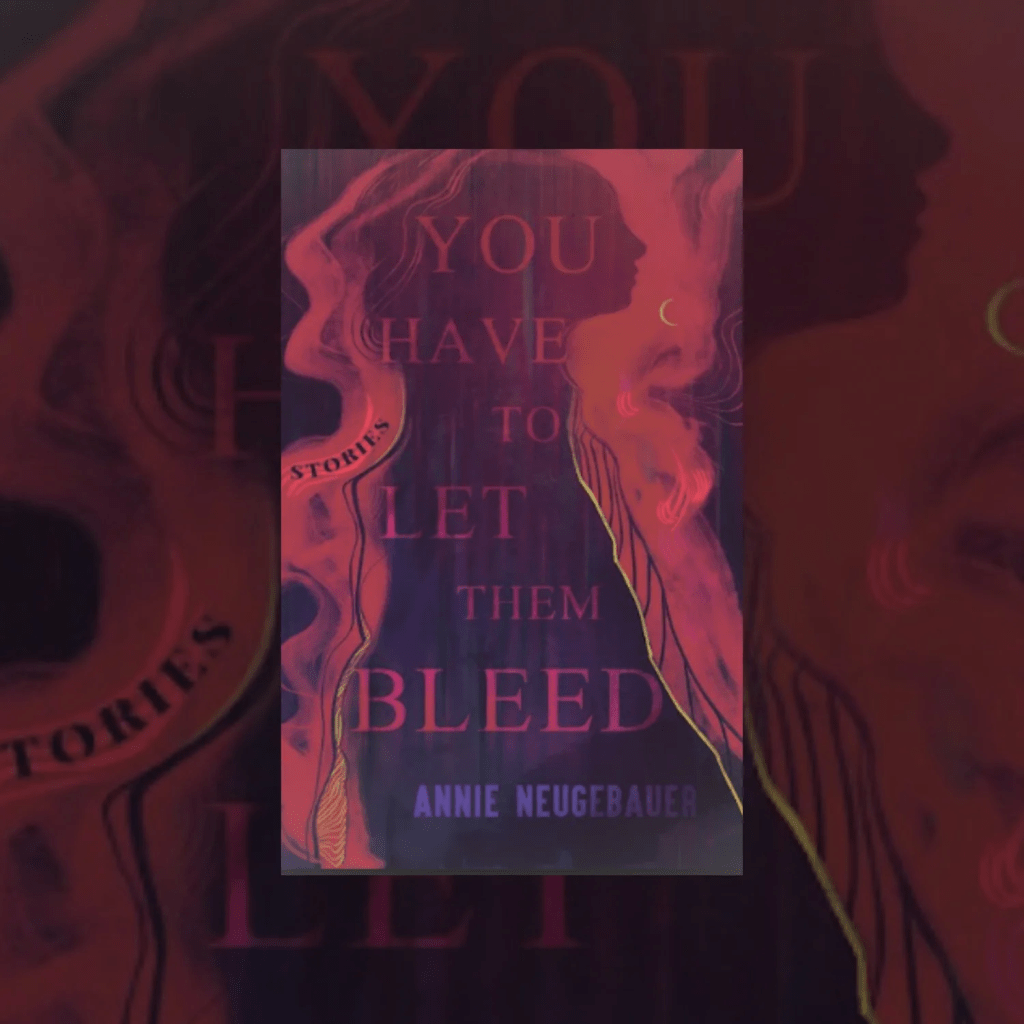
    Cover of "You have to Let Them Bleed" by Annie Neugebauer
    Cover title of “You Have to Let Them Bleed”, from Bad Hand Books.

    It was a terrible and breathtaking  delight to read “You have to Let Them Bleed”, where the fear seeps in slowly, like spilled honey. In this short story collection, sprinkled with vivid and wild poetry, two-time Bram Stoker award winner and award-winning poet, Annie Neugebauer, is at her finest.

    Why this Horror Collection is So Scary Good

    Each story is carefully crafted to draw the reader into a world of the ordinary and recognizable but something goes terribly wrong. With every turn of the page, Neugebauer reveals how modern horror writing can be as beautiful and lyrical as any piece of great literature. 

    In “Churn the Unchurning Tide”, a story of quiet mob mentality running through a group of middle-aged women in an outdoor pool, the visceral descriptions of the tarantula that interrupts the women’s class is disquieting. She draws the reader into the women’s demented and unsettling world and sprinkles just enough hope and light to settle your breath.

    Decorative image of black, pencil-drawn style butterflies, beetles, and dragonflies on a sepia toned background.

    The tight writing of “Cilantro” conveys a depth of meaning, sorrow and horror. My favourite of the collection, I was absorbed in the telling of Jason’s grotesque metamorphosis. The narrator’s lament of their relationship breakdown is real and terrible, the kind of reflection that takes place when a relationship comes to an end. Neugebauer expertly takes us to unexpected and rather horrifying places, weaving body and insect horror with her marvellous play with words to create a masterpiece of dread.

    Who this short story collection is for

    Recommended to an audience equipped to handle horror. At first I wrote “mature audience” but really, if you can’t handle some blood, light cannibalism, or clowns, this fine collection of short stories are not for you. There is something about a rite of passage as a reader to start reading horror far too young. We all have a story about a Stephen King or Shirley Jackson story that ruined a little part of our childhood and still unsettles us to this day. 

    Annie Neugebauer is not a graphically violent writer but she explores some themes that might be tough for some readers. She’s also such an exceptional and talented writer that “You Have to Let Them Bleed” has to be read.

    Early editions with signed bookplate are available from Bad Hand Books mid-February, so get in there and pre-order. The full publication date is March 17,2026.

    Special thanks to Bad Hand Books for providing me with an advance copy. The team over at Bad Hand is fighting the good fight and they publish stunning horror that ruins my sleep and forces me to read in the daylight hours (in the best possible way).

    Check out my review of Things That Go Bump and The Atropine Tree, also published by Bad Hand Books.

  • Listening Notes: Boudica, Mother, Rage and Rebellion

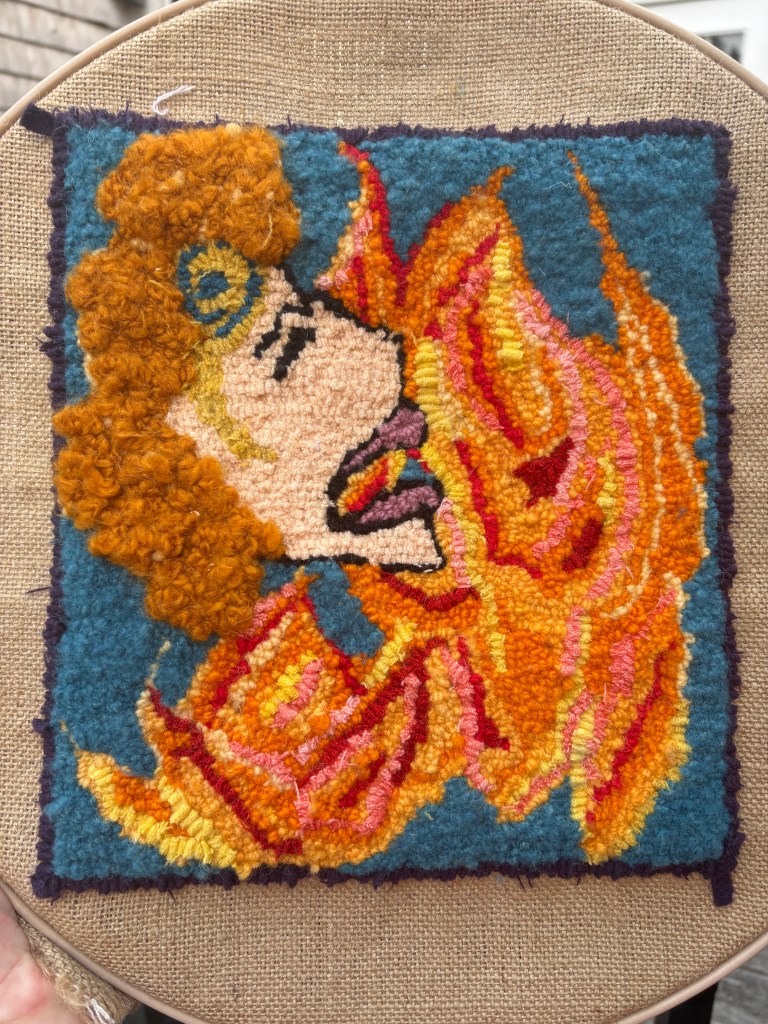
    Hooked rug made of wool strips and yarn. Features a side profile of a woman yelling, her eyes closed. Her hair is raised, textured ginger yarn. Behind her image are orange, yellow and red flames made of wool strips and yarn.
    Boudica and the flames.

    The Story of Boudica

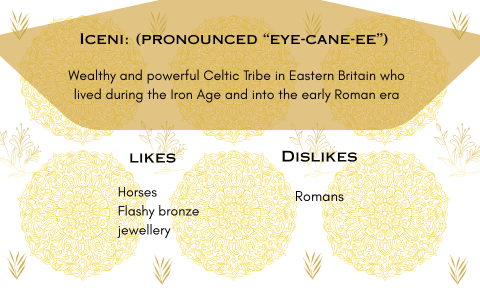
    What we know of Boudica spans approximately two years of her life in 60 or 61 CE (Common Era). She was married to Prasutagus, leader of the Iceni people, they had two daughters and he’d recently died. He’d left half of his lands to his daughters and the rest under tribute to the very reasonable and calm, Emperor Nero. The Romans conquered the island approximately a generation previous and like most places conquered by the Romans, who were not at all bureaucratically and maniacally violent. The people were unhappy. Aggressive behaviour and heavy taxation by the Empire were taking their toll.

    Garrisoned nearby were a group of retired and near-retired Roman soldiers. They were the types of men who spent twenty five years fighting for the Empire and were gifted citizenship at the end of it.

    The abuse and heavy taxation against the Iceni continued and eventually erupted with the public flogging and sexual assault of her daughters.

    Boudica, the Mother

    A mother will take an untold amount of pain until it is turned on her children. Boudica is the story of independence and revolution against imperial might but it is also a story of fierce motherhood. It was never the public flogging or the heavy Roman taxation that fuelled her feral rage and led her army into the throes of battle. It was her daughters.

    I imagine the moment Paulinas’ slaves or soldiers (depending on the telling), entered Boudica’s roundhouse where her daughters cowered, was the moment her mind snapped and all the anger and hurt welled in her chest and exploded out of her limbs. It was this anger that drew her sword and propelled her charge forward. She slayed soldiers, splitting their necks and crushing their skulls where they stood. Each death, intimate and up close as they fought with swords and clubs, avenged some small part of the violence visited upon her daughters’ bodies. 

    The story goes, she and her rambling army of Iceni men, their women and children alongside to watch the spectacle, laid waste along to the way Londonium. Along the way, they burnt down Camulodunum (modern-day Colchester). They took no slaves. The Roman historians took note of this, and I think it points to a binary view of life (freedom) or death, there is no place for slavery. Enslavement suspends the experience of living.

    Boudica was obviously able to lead, but a citizen army can only do so much against a well-trained professional one. The Iceni were drawn into an impossible to maneuver chasm and slaughtered.

    On campaign, once settled for the night, when fires crackled down to burning embers, the sounds of snoring and murmurs to the gods her only company, she could loosen the hard ties binding her heart and weep with sorrow. The other side of grief-filled rage is a well of sadness that blankets your mind and suffocates all thought.

    The story of Boudica and her rebellion is uncomfortable and fascinating because essential to it its overall myth is a mother’s pain. The Elizabethans and Victorians were happy about all the small and mighty underdog sabre rattling they could do with Boudica as their totem.

    Mothers who respond with their own brand of violence and resistance, they are feared and made monstrous. We really only know of Boudica through her violence against the Romans who cast her as excessive and wild and while I think the emotions and rage are true, it doesn’t necessarily mean that’s all she was to the Iceni people. Or that the Iceni people can be represented in one revolt.

    The other side of Boudica’s story (and likely true, since it came from Tacitus) is that her revolt was sparked by heavy Roman taxation and general ill treatment because “the Romans were bastards”, to quote Emma Southon. Her husband dead, the tribe turned to her, a woman. Unfathomable and confusing to the Romans. You want a woman to lead?! Boudica is then fearsome leader, assembling the Iceni masses and standing up against injustice. She rallied them with inspiring speeches and her own bravery.

    She is available to represent woman’s anger, pain and vengeance. The archaeological record still holds her furious burn line under 2000 years of dirt. Women and mothers are so often supposed to be soft and demure, a calming influence. Women’s pain is uncomfortable to witness because sometimes it taps into a well of thousands of years old hurt.

    It doesn’t really matter if Boudica was reacting to the brutality wrought upon her people or an assault on her daughters, it’s that she did it. She led when people were hurting and needed it.

    Listening to Boudica

    The Ancients podcast, hosted by Tristan Hughes has had a few deep dives into Boudica’s life, the revolt and then life for the Iceni after the revolt. Hughes is an excellent and interested interviewer, he leaves space for the historian to speak freely and really explore the fascinating history of this woman and the time period.

    Other sources that have informed my impression of Boudica include Emma Southon’s appearance on Betwixt the Sheets. Inexplicably, the only copy of “A History of Rome in 21 Women” at my local library is in Polish? She is a great authority on Rome and heaps of fun to read and listen to (I’ve read A Rome of One’s Own – recommend!).

    The boys at The Rest is History cover Boudica exactly how you think they would but there are no accents from Tom. On History Hit, Dan Snow is loud and posh about Boudica. It’s not a fatal criticism of the lads, they tend to cover women on their podcasts in a brash or weirdly fawning way (yes, this is about Emma Hamilton and Tom). They’re much better for military history that feature men.

  • Women, Property, and Power: How They Were Her Property Challenges Passive White Innocence in American Slavery

    A review of They Were Her Property: White Women as Slave Owners in the American South

    Historic plantation house in the American South.

    White women were willing, able and enthusiastic participants in the institution of slavery. They were central to its proliferation and economic prosperity.

    There is something in the mindset of some people that racist actions and beliefs exist out there. It’s in a distant past, and the structures and systems we know now have no ties to it and there was never a role for white women in something so unseemly. The white women of the time were positioned as an ornamental audience on the periphery of American slavery, safely ensconced away in their palatial and stately homes. I recently read Stephanie E. Jones-Rogers They Were Her Property: White Women as Slave Owners in the American South, and it is a striking and meticulous study of the very active role white women played in the institution of slavery. It is a damning series of blows against the “passive ornament” argument and states an uncomfortable truth, white women were willing, able and enthusiastic participants in the institution of slavery. They were central to its proliferation and economic prosperity.

    White women used Black bodies to secure their financial independence.

    In They Were Her Property, Jones-Rogers carefully articulates her argument, supported by intense archival rigor, no surprise as the book is based on her revised dissertation. Engaging and rich with personal narratives, she constructs a compelling backdrop to the broad array of legal documents used to support her argument, including probate inventories, deeds, letters, depositions, and newspapers. Jones-Rogers tracks the legal and everyday practices through which white women enthusiastically exercised control over enslaved people, made decisions about labor and punishment, bought and sold human beings, and used enslaved labor to generate independent wealth. This is an important statement – white women used Black bodies to secure their financial independence. 

    Jones-Rogers makes clear judgments about white women’s acts and participation in slavery that are grounded in evidence, rather than a rant. The passage of time and portraits of plantation mistresses wilting in the heat have long been used to romanticise these domestic venues, to the point they are now used as wedding venues. Jones-Rogers are presented as they were – the stage for exploitation. Passages that were once a lament for a time lost, portraits of plantation mistresses wilting in the heat, domestic interiors and genteel rituals are seen anew as the stage for gross economic exploitation.

    The examination of using enslaved people as gifts to mark notable life events like a birth, coming of age, or a wedding is a powerful thread through the book that is both uncomfortable and necessary for readers to encounter. By gifting a person into the structure of the family, it reinforces the role of family as a working framework for slavery and normalises it within everyday, interpersonal relationships. The young white girls under the tutelage of mothers, aunts, and grandmothers, learned to command the labour and daily activities of enslaved people, to train Black bodies for profitable work for which only they would reap the benefits. In this way, they secured their economic and social security. Readers are forced to confront the banality of their brutality and the components of a system that brutally commodified human life

    The cultivated image of white femininity, its emphasis on wan beauty, domesticity, gentility and moral superiority fit seamlessly into the greater slave society, cementing a hierarchy of feminist representations and presented as antithetical to the extreme violence and lack of humanity that exists in the institution of slavery. The girls and ladies are so pretty and dainty, they couldn’t possibly own people, their image asks us to believe.

    This book is an important read – politically, personally, and ethically. History is not a closed box, shut away with painful secrets that would never see the light of day again if we hope and pray enough. It is no secret the world (and the United States in particular) is at a point in time when the old dinosaurs of hatred are attempting a last grasp at power. White women are once again complicit, as usual. It’s hard to miss how the Trump administration wields its women, with their similarly puffed cheekbones, plastic sex appeal and amorality.

    Jones-Rogers deftly presents an unflinching and unflattering examination into white women’s role in slavery and dismantles the genteel image her descendants have relied upon ever since (here’s looking at you, Carolyn Donham Bryant, Betsy DeVos, and Bari Weiss). This dramatic reshaping of white women’s role in slavery has consequences for the conversations we are having today and the ferocious dismantling of the American government we are seeing.

    Recommended Reading Level

    They Were Her Property is a college-level to general adultlevel text. It is grounded in rigorous historical scholarship and written with academic precision, but at the same time, Jones-Rogers’ prose is lyrical and accessible to a public audience.

    I listened to the audiobook version, narrated by Allyson Johnson.

    On a practical level – Jones-Rogers’ work is accessible without sacrificing any of her research. It will be unsettling. Slavery is always disturbing.

    Recommended to readers invested in decolonizing their previous learning, gender studies, American history and women’s history. Jones-Roger’s’ research is part of a larger scholarly reorientation that demands we consider how our past and present collide under racial capitalism.

    Check out my Review of Tales of Koehler Hollow, it is the family story of Amy, a formerly enslaved woman who built a home in freedom for her family.

  • Glowing By the Light of “Frail Little Embers”: A Literary Review of new Short Story Collection

    Glowing By the Light of “Frail Little Embers”: A Literary Review of new Short Story Collection

    fire in a metal barrel surrounded by rocks

    It was a delight to read “Frail Little Embers” by Fjia Callaghan, this collection of short stories is a sweet and tender package of magical realism. There is tea, handmade candy, visits to the sea, folklore both light and dark, and subtle tension woven through each story. Her passion for using myth and folklore “to creat stories that give people hope in times of darkness”, as stated on her bio, is evident in this collection. 

    “Running with Wolves” is a gentle retelling of Red Riding Hood when the roads are closer to the woods and Red has a smartphone. The beauty of a short story is the way in which it can tell us a lifetime of sorrows and joys in one small passage of time and we experience this repeatedly through the collection.

    Callaghan plays around with form, such as in “September Sunsets” and passages of evocative and whispery poetry. It works in this story but I’m unsure how necessary it is within the context of the entire collection. At the same time, the structure of the story is in sharp contrast to the many ways Emily misunderstands everyone around her, from her daughter to the man who  brings her firewood.  

    There are certain lines throughout this short story collection that are devastating in their lyrical beauty, “I curled up in a ball of smoke and shadow and ached for all the things I didn’t understand” (Callaghan, 141) from the Edge of Morning made me pause while reading. This was my favourite in the entire “Frail Little Embers” collection, it showcases Callaghan’s form and the way her writing is like a song.

    At twenty-one stories, I think it’s fairly long for a short story collection. Some stories, like “The Fleeting Ones” read like a character sketch with limited plot but a lot of foreshadowing that could have been fleshed out in a meaningful way. There’s potential to fill in the spaces and if anything, there’s more than one collection here if the time had been spent to find them. This could be coming from a selfish place as I look forward to reading more from Fjia Callaghan.

    Recommended to readers who enjoy whimsy and delight, magical realism, folklore, myth, and magic.

    “Frail Little Embers” was published on 8 April 2025  by Neem Tree Press, thanks to them for making the title available on Netgalley for review!

    Did you know I’ve started publishing my own short fiction? You can find it over at Under the Poplar Tree on Substack. Be sure to subscribe, I publish a new short story every other Thursday.

  • Hitlers Furies: Women Unleashed in the Reich

    A review of Hitler’s Furies: German Women in the Nazi Killing Fields

    As long as political ideologies seek to control the body and social lives of women, the personal will be political.

    I sometimes think it’s a trite and outdated phrase and then Roe v. Wade is turned over in the US and Nova Scotia announces an epidemic of intimate partner violence, and I’m reminded that in fact, no, the personal, the body, it is still political because men think it ought to be. Women have never asked for powerful men to make our bodies the site of moral imperatives and political objectives, to wield our bodies as the softer weapons of war.

    There is this idea that Nazism and Fascism uniquely appeals to men (there’s more Elon Musks than Laura Loomers in the world), and as a result, women were absent from the most terrible scenes of the crime (their domain children, kitchen, church), however we’ll learn how it was distorted and violent, all of it unbearably normalized, in Wendy Lower’s “Hitler’s Furies: German Women in the Nazi Killing Fields”.

    Originally published in 2013, Lower’s book is the result of twenty years of painstaking research into archives (notably in the post-Soviet Eastern Front), witness statements, and investigative work. It is chilling in the amount of everyday death and brutality Lower has catalogued and the straightforward way in which she has presented it all. Some critics at the time noted she did not include accounts of professional killers, like those in the Reich Security Main Office or SS, as mentioned in the linked Guardian article. I can appreciate the sentiment, but I think it’s even more sinister to consider the unending ‘normal’ and brutal ways regular women were part of the regime – secretaries shuffling files that sent hundreds to the death squads, after work ‘shopping’ for a new pretty dress in the discards of victims from the gas chambers. I am a regular woman, living a fairly regular life. Most of us are ordinary people, living ordinary lives and relying on the system and world around us to keep functioning as we expect. Their system slowly sped its way into destruction, those in power made substantial legal changes that eroded the entire known word and as we experienced through the pandemic, people still had laundry and a job and meals to make. The every day necessaries continue to exist. That’s a more unsettling and universal story.

    Wendy Lower first introduces the reader to what she calls the “lost generation”. Born in the tumult of Weimar Germany, with its blossoming civil rights, devastating economic and political turmoil and untold amounts of violence. There was as much promise, like Magnus Hirschfield’s Institute for Sexual Science and the women’s suffrage movement, as there was economic collapse and despair.

    This generation of women, disillusioned and morally lost according to Lower were perfectly primed to be swept into the National Socialist movement. The first two chapters of  “Hitler’s Furies: German Women in the Nazi Killing Fields” describes this environment and the perverse opportunity offered by the Nazis on the Eastern Front (as teachers, nurses and socials workers extolling Nazi “virtues”), notably once they’d made it impossible for women to find work they wanted. 

    The next three chapters describe the lives of six women sent to the Eastern Front and Lower ultimately divides the women between three categories: Witness, Accomplices, and Perpetrators. The most egregious actions were obviously taken by the perpetrators.

    There is something to be said for the women like Annette and Ingelene Ivens who were “exceptional after the war” (Lower, 89) for the ways they spoke publicly what they saw. They didn’t hide away their involvement in family chests and seek to hide behind their femininity, like so many of the perpetrators. They didn’t go to the Stasi after the war ended and trade secrets for their freedom.

    In the final chapter, “What Happened to Them?”, the answer is not much. White women, even women whose only power is the whiteness of their skin and their gender, have never been adequately punished for their murderous participation in things like the Third Reich or the murder of Emmett Till. The Guardian review accuses Lower of overselling her material, we know women can be violent and abusive, but we’re beyond it, and maybe that was the case in 2013, in the heady years of Obama, post-Sex in the City and Bridget Jones. But in 2024, 45% of white women voted for Trump. In his first days in office, he stripped away Diversity, Equity and Inclusion (DEI) programs that ensured employment for women and people of colour. Keep this in mind when you read chapter one of “Hitler’s Furies”. We’ve been seeing the rise of tradwife content which presents an idealized image of the mother who sacrifices all for the family. This idealized image, like that of Johanna Atvater in her crisp white apron, is a smokescreen. They don’t evolve much and only have one playbook. 

    Recommended to readers interested in women’s history, social history, World War II, German History and Fascism.

    I borrowed “Hitler’s Furies: German Women in the Nazi Killing Fields” from my local library.

    My recent reviews of women’s war experience can be found here: Devastating Minutiae in the Palestinian Experience: A Literary Review of Minor Detail

    Review of a Poet’s Memoir: Looking at Women, Looking at War by Victoria Amelina

    Did you know I’ve started publishing my own short fiction? You can find it over at Under the Poplar Tree on Substack. Be sure to subscribe, I publish a new short story every other Thursday.

  • Gauzy dust-filled horror: Review of The Atropine Tree

    Gauzy dust-filled horror: Review of The Atropine Tree

    Aldane Manor is an ancient home of low-beamed ceilings, crumbling walls, poison gardens, and deadly secrets.

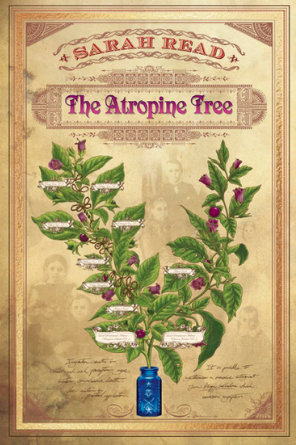
    Front cover of The Atropine by Sarah Read. Sepia toned background with a hand drawing of a two stems of a plant with red berries and green leaves like a fern, in a blue bottle.

    The Atropine Tree by Bram Stoker award-winning writer Sarah Read is a delightful romp into the absurdity of gothic horror. A medium sister, one who talks to ghosts – not size medium, poison herb gardens, centuries of ghosts and strangely uneven floors, and herb-laden fires stoked too high all lend themselves to creating a heady, gauzy feeling that immerses the reader. Gothic horror is meant to be over the top, absorbing in its terror and in Read’s very capable hands, The Atropine Tree is incredibly engrossing. I lost an entire afternoon to the world of Aldane House.

    It is overwrought in the very best ways, richly detailed as I could easily picture Nelda’s dramatically stained lips and teeth and feel the deep luxury of the carpets in her room. I don’t think I breathed when her room became crowded and overstuffed and heated, much like Alrick.

    Fiction like The Atropine Treeis the very best of escapist reading, and even though no one could possibly take that many herbal pastilles and antidotes, it’s immensely entertaining and Read’s writing is so richly detailed and engrossing, it is like having a movie play in your mind while reading.

    The story is like something out of the other side of the Dickens looking glass, with its usurper heir and street urchins languishing in the workhouse. 

    Highly recommend to anyone looking to escape into an absorbing, dust-filled horror, lovers of truly beautiful prose and anyone who simply likes to read because Read is a very talented wordsmith. The genre of horror shouldn’t dissuade any readers from picking up a copy of The Atropine Tree, it was so enjoyable to read.

    Many thanks to Bad Hand Books for sending a copy my way! Check out their website to order your own copy and check out some of their other titles. Check out my review of Bad Hand’s short story collection, Long Division.

    Did you know I also write short fiction over at Substack? Check out Under the Poplar Tree if you like my writing and want to read more of it.

  • Review of a Poet’s Memoir: Looking at Women, Looking at War by Victoria Amelina

    “What weapons do we choose to pursue justice in the hardest times?

    Victoria Amelina, Looking at Women, Looking at War

    The memoir “Looking at Women, Looking at War” is one writer’s journey to answer this question in the face of occupation and war. Victoria Amelina, children’s literature author and mother to a young son was confronted with this question on February 24, 2022 when Russia invaded Ukraine and her world was upended. The resulting memoir is her experience as a war crimes researcher and writer reconciling with her own identity and the “forever endangered Ukrainian culture”.

    An honest and intimate chronicle of her own experience, it is also of other extraordinary women in the resistance. Women like Evgenia, a prominent lawyer who were colourful clothing to court, but now carries a gun at the frontline. Oleksandra, her friend and mentor, who documented tens of thousands of war crimes and won a Nobel Peace Prize in 2022, though not one of her hundreds of cases went to The Hague in the seven years prior. The finer details like this sucked the air out of my lungs while reading. This book offers brilliant insight into the experience of women in and at war, but it is also contemporary evidence of Russia’s criminal attack on Ukraine. It is undeniable yet it continues.

    War is absurd and relentless and evil, a continuing slog of noise and death. Victoria Amelina captures the unspeakable despair and moments of joy that are the experience of war. It is an assault on the senses and in juxtaposition she writes of feeling disconnected and worn out. Body tired from the trauma and grief. Oleksandra tells her to take time and put cream on her face but to really feel it before she does anything else. How often do we do something similar? This sensory experience is a return to another time and a centring moment before she returns to recording war crimes and atrocities.

    This book could so easily be a litany of awful events pieced together, but it is instead a raw and lyrically beautiful account of a woman making her way in a world of war, attempting to create a path for justice. The awful things are alluded to but Amelina is a writer of grace and compassion, the reader can understand the allusions to violence and sexual assault without needing the details.

    The manuscript is unfinished. Victoria Amelina’s life was cut short by a Russian missile attack and she died on 1 July 2023. There are sentences left undone because of her death. Fragmented notes tell of awful Russian actions, like the small bit of a master’s work that could be seen on a FaceBook photo, posted by the Russian soldier who stole it Half of a sentence tells us about the death of a man miraculously rescued in another chapter. I had to stop reading and watch the crows in my favourite tree for a while after that. There is no ledger of fairness in war.

    Amelina reveals the bleak despair wrought by the violence of war and the fear of being close to death so that we can understand the small ways people are trying to retain their humanity in the face of war. The bag of walnuts a mother gives to Victoria after their interview. The reader is brought into the group of artists trying to save a snag beetle found on the sidewalk,their attempt to save an inconsequential life after the gut punch of learning about Volodomyr Vakulenko’s abduction by Russian forces. His death is a terrible thread woven through the novel and each time we are reminded that Amelina was writing about friends and colleagues. She is not simply an outside observer in this conflict.

    Reading this makes me consider what I would do if my country came under attack and I had to face the reality of war crimes and terror. Would I be brave and charge into the war zone to document the horrors done by the enemy? Would I find a sturdy basement and plead with my neighbours to find shelter with me? I should hope so, and I think we can hold on to what Victoria Amelina says here: “No choice made by those who want true justice is easy, and for most of us, the outcome of our battle is still unknown.” (p.10)

    Victoria Amelina’s roots as a storyteller can be found “Looking at Women, Looking at War”, evident as she set out to chronicle the lives of extraordinary women. In writing about the people in the embattled Donetsk region, we’re invited into her inner world and what made her courage necessary. Such is the cost of resistance.

    Recommended to readers who enjoy history and women’s literature. The memoir requires patience, broken sentences will never be fit together, we won’t ever have answers as to what she intended in some sections. The tragedy of war exists in these gaps. “Looking at Women, Looking at War” will be be published 18 February 2025 and available at all fine retailers and booksellers after that date.

    For further reading, check out Hunting for Vakulenko to read more about the poet and his abduction and murder by Russian forces. A murdered writer, his secret diary from the Guardian provides further context about Vakulenko.

  • Tensions grow “Into the Fall”: A Review of New Psychological Thriller

    My interest was initially piqued by Tamara L. Miller’s “Into the Fall” because she’s Canadian, and there’s something to be said for supporting local talent but this did not disappoint and is in no way Can-Con filler! Miller’s debut novel is a tightly woven tale that she expertly and finely unravels until the very end. Based out of Ottawa, Miller is the President of Ottawa Independent writers and her website can be found at by Tamara Miller.

    “Into the Fall” is a suspenseful psychological thriller about a family broken apart overnight by the disappearance of husband and father, Matthew in the wilds of northern Ontario. The family has traveled north of Ottawa into a part of the country that is undeniably beautiful, but also incredibly dangerous. We are constantly reminded of this by Officer Rob Boychuk, a veteran of the force and though reserved with our title character, he consistently shows Sarah and her children kindness. I laughed out loud at the name of Boychuk’s partner – Chantal Dubé, Miller couldn’t have possibly used a more French-Canadian name and in a world of books written by Americans, it was like a secret joke for the Canadians (truth be told, I think I know a Boychuk. Canada is small).

    In a former life, Miller was a policy writer and it is evident in the complexity of this story and the background she is able to create for each character. The world she builds for each scene and interaction is complete and well-thought; we feel the growing tension and begrudging respect between Boychuk and Sarah with each subsequent meeting. 

    Entertaining and well written, “Into the Fall” is an elevated thriller, perfect for readers looking for a complex story that draws you in and holds you captive until the end. “Into the Fall” hits bookstores 21 January 2025. Thanks to the publisher for providing an advance copy to Netgalley.