Author: Joy Farrell

  • Medieval Thoughts on Gender: Review of Eleanor Janega’s “The Once and Future Sex”

    I’ve wanted to read “The Once and Future Sex: Going Medieval on Women’s Roles in Society” for quite a while and I’m glad I did! I It’s a fun and historically exacting romp by historian and broadcaster, Eleanor Janega.

    In it, she explores the multiple roles of women in society and the ever changing perceptions of beauty and women’s bodies, labour and intellect. Dr. Janega dispels the idea that time is on a linear course from the “dark ages” and illiteracy to enlightenment, space travel and human rights.

    Being a human is messy business and I’m more likely to ascribe to the notion of societal values existing on a sort-of pendulum that swings back and forth, bringing us forward towards equity and justice a little more with every swing. Even when it feels that we’re moving backwards, there’s always something fighting to keep us from going too far back. “The Once and Future Sex” explores that swing over the last 1000 years and the changes it has made throughout history in Western Europe.

    This is an approachable history book, presented in a very straightforward way for the average adult reader. In the appropriately named chapter one, “Back to Basics”, Janega goes over ancient human history and the great ol’ boys who created our now familiar concepts of science, knowledge, and existence. Notably, Aristotle and Plato who knew nothing about women nor did they want to, which is why everyone believed in brain semen and floating wombs for so long. They and their ilk were responsible for many treatises, diatribes and general asshattery about women and their nature, the essence of being a woman (as if the essentialism wasn’t enough),and one though-line of it all is that women are somehow inferior. 

    Medieval thinkers used the ancient scholars as their baseline to understand women and as Janega points out, “when it comes to sex differences, the ideas of a core group had an outside influence on medieval thought.”  How disastrously familiar as we see our neighbours to the south become beholden to the whims of evangelical Christians bent on manhandling the healthcare system with superstition and fear. In this way, our society continues to hold on to the motherhood requirement in order for women to be considered a proper woman. The value of class and wealth continues to be displayed on women’s bodies but instead of small apple breasts and a soft belly (the medieval ideal), women are to bear children then show no sign of it,with a tight stomach and perky, ample breasts. How a woman spends her time and money is reflected on the body. 

    We’re able to make choices about our bodies and our lives, obviously in comparison to medieval women, but I think we continue to carry the burden of a society built on taking that choice away.

    An engaging read, Dr. Janega is the type of historian who is able to bring all the nuance, quirks, and weird bits of history alive. She dispels multiple myths about the medieval time period, those poor folks didn’t have germ theory and they were trying their best. She gives careful consideration and represents all classes of society. Lower and middle class women are most often found in legal records, not everyone was a fancy gal in King Henry’s court.

    I listened to the audiobook version, narrated by Samara Naeymi and she is great at conveying Janega’s writte nemphasis and wit. Dr. Janega has an irreverent sense of humour. Her irreverent voice is well on display in the Once and Future Sex (especially if you’re family with her History Hit podcast, Gone Medieval). 

    A note about use of binary language – such is the nature of discussing sexism throughout history. This is not to say that queer, intersex and gender non-conforming folks didn’t exist, but if they barely understood cis women, today’s discussion on gender identity would send the average medieval person into some knots.

    Recommended Reading

    Definitely recommended to fans of history, gender studies and anyone looking to dunk on Plato, feminism, medieval history, or the experience of being a woman.

    Best suited for adult readers at or above college reading level.

  • A Call to Honesty and Love: Review of Trans Memoir “Calling My Deadname Home”

    A Call to Honesty and Love: Review of Trans Memoir “Calling My Deadname Home”

    Literary review of a memoir of a transgender man’s journey to find love and acceptance.

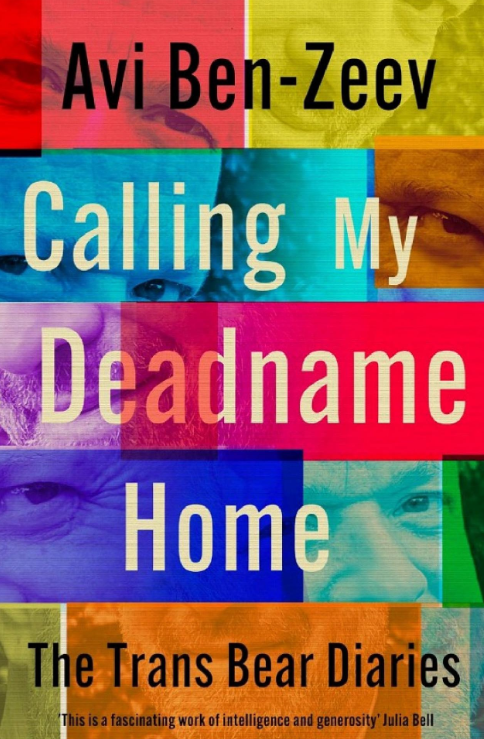
    Cover of the memori, "A Call to Honesty and Love: Calling My DeadnameHome" by Avi Ben-Zeev

    Dr. Avi Ben-Zeev’s memoir, “Calling My Deadname Home”, is an extraordinary and heart wrenching journey through time to reconnect and let go of his former, female self, Talia. Growing up in a working-class family in Israel, Dr. Ben-Zeev only just finished high school, yet now holds a PhD in Cognitive Psychology, an expert in stereotype threat and implicit bias, he is a writer and professor.

    This is a beautiful, heart wrenching gift of a book. There are books that enter our life and lodge themselves directly into our heart with their brevity, love, and honesty. This was one of them. 

    “Calling My Deadname Home” is told in three parts – early transition, later transition, and Talia’s story. There is a sense that Talia was in constant flight from the imprisonment of her self and her past and only when Avi reconciles this sense of imprisonment and the sacrifice that Talia is safely freed. 

    At no point will Avi or Talia sacrifice their authenticity, the driving force within themselves to act in what seems to be a just way. We see this in Talia’s determination to avoid her mandatory service in the IDF. 

    Their journey is one that shows us we are not just one aspect of our personality, one traumatic event, or one action we regret. We are all of these things and none of them at the same time as there’s always an opportunity for forgiveness and love. “Calling My Deadname Home” is as unflinchingly honest as its writer as he moves in the world. There are themes of self-loathing, particularly in regard to the sexual assaults of young Talia and the lasting traumas. 

    A beautiful, heart wrenching gift of a book.

    Avi writes with such honesty that Talia’s loss of self and pain is palpable on the page. 

    There is sex, some of it kinky, and I feel like straight vanilla folks will view the sex as “graphic” simply because the bodies doing it are not cisgender. There’s no need to clutch any pearls and they’re in fact written a lot better than most sex you encounter in current books and most importantly, it’s between consenting adults. 

    Definitely recommend to readers interested in gender studies, trans experience, and the non-Western experience. There are a lot of books in the world about cis white dude’s experience, “Calling My Deadname Home” is the brutally honest opposite of that and I’m better for having read it. We should all listen to more voice’s like Avi’s.

    “Calling My Deadname Home” will be published 14 November 2024 by Muswell Press. Thanks to the publisher for providing early review copies to NetGalley.

    View of British Columbia's Sunshine Coast. Long grasses line a pebble beach covered in driftwood. Tall evergreens and a mountain are in the background, the sky is an incredible cerulean blue with white wispy clouds.

    A view of the Sunshine Coast, where I was visiting when I read this spectacular memoir.

  • A World of Lies: Review of A Short History of the World in 50 Lies

    A quick and interesting read, I’m delighted I immediately tracked down and read  “A Short History of the World Told in 50 Lies” after I heard Natasha Tidd’s interview with Dr. Cat Jarman on the History Hit podcast Gone Medieval (it’s from the back catalogue in the series).

    The fifty stories are told in chronological order, beginning with an ancient king lying his way to the throne and ends with the relatively recent Chernobyl Disaster.

    It’s an unsettling truth that “fake news” is not a new phenomenon, created out of nothing by Trump and his ilk. Apparently Julius Caesar was one of the first to give the spin doctors a go, and it’s been a heavily entrenched practice ever since that the powerful lie and get away with it, typically only felled by their own hubris.

    Some of these lies have held on for longer than anyone could have imagined, the sort of conspiracy-laden shit the far right will peddle to sow fear and mistrust. There’s something exceptionally depressing that the story Simon of Trent, a twelfth century blood libel case, resurfaced once again only a few short years ago.

    Tidd accounts the tragic story of the Tuskegee Experiment that continues to have an impact on Black Americans, to the adventure and might of Jeanne and her Black Fleet sailing the English Channel on her mission of revenge. 

    Recommended Reading Level

    A very approachable read, “A Short History of the World in 50 Lies” is the perfect vacation read for history buffs, a general audience who wants to know a little bit about a lot. Natasha Tidd’s voice is friendly and I definitely recommend!

  • A Compassionate Examination: Book Review of “The Five” by Hallie Rubenhold

    The Jack the Ripper case is likely the most notorious series of murders in history, adapted into countless reproductions and theorised on endlessly, but in historian Hallie Rubenhold’s “The Five: The Untold Lives of the Women Killed by Jack the Ripper”, we are presented with the humanity and and heart wrenching accounts of the victims instead of another sensational drool over the bloody murders. Rubehold’s work is a devastating and intimate portrayal of these women’s lives and the ways the system, what it was of workhouses and meagre pensions paid in a husband’s name as long as he was alive, was not one made for women. Rubenhold effectively strips away the spectre of the notorious Jack the Ripper to provide us with an intimate portrayal of the victims’ devastating lives. 

    Photo by cottonbro studio on Pexels.com

    Rubenhold tells the complete story of each woman’s life, from birth to death, as much as it can be known and in so doing she is able to present whole women. “The Five” opens with the first victim, Polly, the infamous drunk, but we learn she was more than that – she was a wife and mother,  a woman who would never have been killed if the justice woman allowed a woman to divorce her husband because he was sleeping with the neighbour.  Her options were to stay, her husband and his girlfriend openly having a relationship in front of her, or leave to the workhouse. Her children would have to stay behind. We forget what it means to have no options.

    We’re often more concerned with hearing the gory details of the murder instead of the lives lived by the victims, this is the issue with most true crime content. Rubenhold deftly guides the reader to the most likely moment the victims encountered their killer, but there are no violent, bloody details of the murder. 

    Each account tells the story of how it doesn’t take much to derail a woman’s life. The most vulnerable have always been those who are one illness, one traumatic event, one death, away from homelessness. Rubenhold shows us over and over again, through these five women, what it means not to protect them.

    Recommended for readers interested in history, women’s experience, and true crime that is approached ethically and without judgement or sensationalism.

    Additional resources on this case include the Jack the Ripper miniseries by History Hit podcast, After Dark: Myths, Misdeeds, and the Paranormal. Anthony and Maddy provide a close examination of the most likely suspects in the Jack the Ripper murders. Much like the women, these men were on the fringes of society in their own way (save the Prince).

  • Book Review of Psychological Thriller: After Image

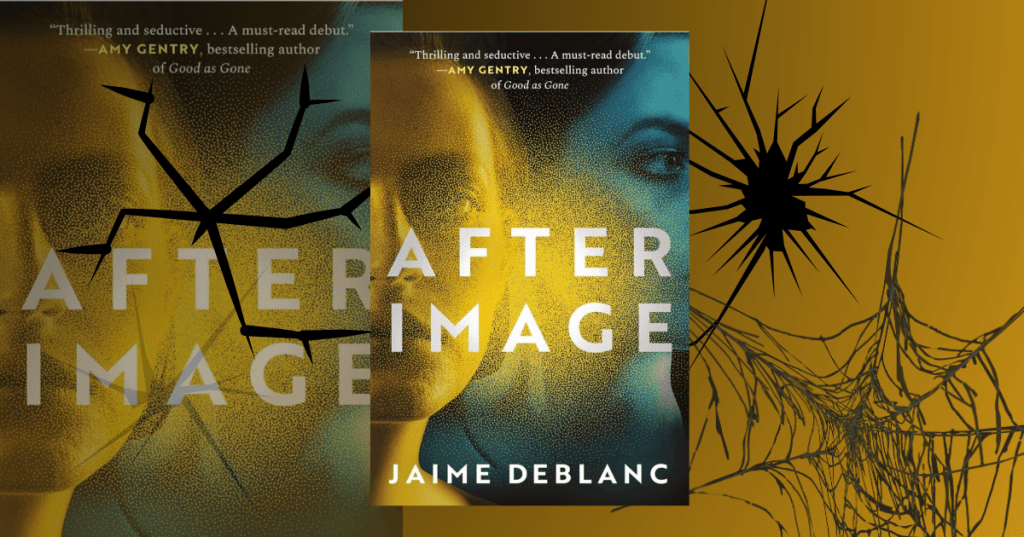
    Intricately and beautifully woven, “After Image” by author Jaime deBlanc is a tale of loss and the unbearable not knowing when a loved one disappears. Jaime deBlanc pulls us into this world through Natasha – a young woman traumatized by the loss of her (step) sister four years prior. The novel opens with the discovery of human remains in the nearby hills and Natasha’s visit to the police station to identify belongings found with the remains. 

    It is here we learn that Natasha has suffered from Conversion Disorder since Allie went missing. In another time, this temporary blindness caused by the brain’s response to trauma was called ‘hysterical blindness’. It plunges Tash into darkness when the anxiety and stress builds to an unbearable level. Despite this, Natasha appears to be a reliable narrator, as she takes us back and forth between her present (2017) and 2013, when Allie went missing and everyone’s lives changed. 

    Over time, deBlanc carefully doles out tidbits of information and hints subtly at the depths of each character’s identity. She carefully dropped Tesla into the timeline – Isabel, the missing girl’s mother, is seen driving a Tesla Roadster in a 2008 flashback. The first Teslas were released in February 2008, and of course the unbelievably wealthy and vapid Isabel would be among the first to have this car. A cutting yet subtle indication of her insipid grasp at being elite. 

    A few elements I predicted and in another writer’s hands might seem overdone (the brief affair Natasha has – really?), but there are only so many ways to fit all the pieces together and the difference is in the telling. Jaime deBlanc has crafted a story that is breathtaking in its careful handling of Natasha’s grief and the relationships undone by a disappearance. I was continually gripped by the story but also deBlanc’s writing, it is truly a delight to read.

    Highly recommend to readers who enjoy a mystery and want to be absorbed in its telling. After Image by Jaime deBlanc hits bookshelves October 8, 2024. 

  • The Rape of Nanking: The Forgotten Holocaust of World War II

    A review of Iris Chang’s “The Rape of Nanking”.

    The “Rape of Nanking” by Iris Chang, first published in 1997, remains a pertinent and disturbing read to this day. Researched for over two years, Chang recounts the devastating Nanjing massacre (1937-1938) by the Imperial Japanese army, during the Sino-Japanese war between the Republic of China and Imperial Japan. Nanjing was the capital of the Republic of China during this period. 

    Aerial view of a cave with water swirling into it.


    This was an incredibly painful and dark time in Japanese history – one they had only started to address when Iris Chang published “The Rape of Nanking” (Murayama Statement, 1995). The pervasive silence is what drew Iris Chang to research and eventually write “The Rape of Nanking”, as well as her own parents exile from China – their route took them through Taiwan to America. 

    Little research had been done until that point, at least not anything remarkable that would hit mainstream media and Chang was acutely aware that survivors were growing old and dying. So, she began to research and devoted the next two years of her life to learning everything she could about the mass murder of Chinese civilians at Nanjing.

    The “Rape of Nanking” is divided into three main sections: The first narrates the mass murder of Chinese civilians from multiple viewpoints (the Japanese military, the Chinese victims, and the Westerners who desperately tried to help civilians), the second part covers postwar reaction to the massacre, and the third examines the factors Chang believes led to the massacre.

    Chang writes with a strong and precise voice – her own personal horror is evident as she provides factgual accounts that are unsettling in their ordinariness. It was as though the soldiers murdered by rote, their movements methodical as they cut down civillians and exacted devastating amounts of sexual violence. Criticism at the time of its publication pointed to Chang’s evident personal bias, her limited research experience as she wasn’t a trained historian; and I wonder how much of that criticism was heightened by her 2004 suicide. Her husband, Bretton Lee Douglas, address Chang’s deteriorating mental health and suicide in a newly added section for the new edition and he addresses both her experience as a researcher and a family history of mental illness. Reading this book so long after any contemporary criticism, it feels macabre to comment but also naive to think one wouldn’t be impacted by researching the evil actions of fellow human beings. There’s only so much objective reporting one can do when writing about an elderly woman raped to death.

    In the epilogue, Change writes of a contemporary conflict, “the international response to the Nanking atrocities was eerily akin to the more recent response to the atrocities in Bosnia-Herzegovina and Rwanda: While thousands have died almost unbelievably cruel deaths, the entire world has watched CNN and wrung its hands.” (Chang, 2014, p. 364). Except now we watch Instagram reels and TikToks of Palestinian parents carrying their dead children. 

    This isn’t a political blog in so much as I don’t write about politics, but the personal is always political because we are people living and existing in a political system. Human beings don’t change very much, history will tell you that, no matter how much time passes, there will be people who do awful things, and people like Minnie Vautrin who try to save people from awful things, and there will be people like Iris Chang who seek to retell these stories so they are not forgotten. 

    I read this while staying at a cabin on the south shore of Nova Scotia with my youngest child. There is some safety in reading about the atrocities of the human condition while surrounded by nature’s beauty. “The Rape of Nanking” is a good (English language) read to have a broad understanding of the events that led to the massacre and remains relevant to this day. Readers interested in World War II history (as this is adjacent), history, and China would find this a valuable read.

    View of a white sailboat                                        through a cave, The sky and ocean are both tinged grey.
  • Tales of Koehler Hollow: Reclamation, Oral Traditions and Black Love

    A review of “Tales of Koehler Hollow”, a collection of family stories from a formerly enslaved women.

    Image of the book cover of Tales of Koehler Hollow, aged paper background with images of dried flowers

    Tales of Koehler Hollow tells the story of Amy Finney, a formerly enslaved woman, and her descendants who established a homestead of family and community in the Appalachian Mountains. The stories are told simply through the voice of Amy’s great-great granddaughter, Naomi Hodge-Muse, and collected by anthropologist Christopher A. Brooks. 

    The stories in this collection draw on the oral tradition of storytelling and reading it felt very much like sitting with a beloved auntie, so effectively did Dr. Brooks captures Hodge-Muse’s voice. There is very little in the way of superfluous language or lengthy descriptions, people are introduced with tenderness and care but there is honesty and acknowledgement that people are complicated and flawed. I was struck by the way Hodge-Muse described complicated family members, acknowledging the difficulties of growing up with an emotionally immature mother but also we know her mother was loved and more than a selfish, flighty woman.

    The African-American experience is one that has been often marred by violence and loss, but in this anthology we are presented with a family that is strong, complex and driven to remain in community. There is devastating loss and violence, but it is recounted with the same calm tenor found in the rest of the collection.

    Tales of Koehler Hollow is an important book to read and I’m grateful for the opportunity. History is often controlled by the powerful, they had the money to create records and steal people from their homes. Having this record of Amy and her family’s experience is a gift. Dr. Brooks has helped preserved this family’s history in a restorative way, a long, long time after their history was brutally ripped away. This collection is an extension of what drove Amy to establish the family homestead – without that grounding, we wouldn’t have this collection of stories, as told through Naomi Hodge-Muse.

    Tales of Koehler Hollow is available for purchase at Unsung Voices Books.

  • Characters Take Flight in MONARCH: Literary Review of New Short Story Collection

    Dusty road background and book cover of Emily Jon Tobias' short story collection, Monarch.

    In Emily Jon Tobias’ new collection of short stories, “MONARCH”, we are confronted by realistically flawed characters who are given the space to form, make mistakes, and heal. An award-winning writer and  Pushcart Prize nominee, Tobias was raised in the American midwest and now lives in Southern California.  The way she captures and releases hard fought words has a feel of that hardscrabble grit you used to associate with an essential Americanism. It’s all the more poignant that the characters in MONARCH are imperfectly real – addicts and sad girls, overwhelmed mothers and people whose tether to sanity has loosened. 

    Tobias plays with language and voice to raise her characters into existence.The title story stopped my breath and as I read, I had the distinct sense that Tobias was gleefully playing with her words, stretching out each sentence to its limit, a fullness like the protagonist’s intentional weight gain. My first inclination – trim these sentences, they seem too full created the sense I was as quick to jump to conclusions as the people who brazenly stare at Georgia and judge her size. Such is the subtle brilliance of Tobias’ writing – the excess was an intentional weight and slowing down that ties us to Georgia.

    We see this again in “Vida”, the sentences short and choppy with Wiley’s anger. Tobias’ characters are confused and confusing – which is what I feel most days. Which is to say, each is fully formed in their humanity as its splayed on the page for the brief glimpse we have as a reader. We are like passersby, sometimes witnessing these characters’ worst moments and the way Tobias intends to pull them through and heal some of the cracks. 

    The book includes a reading guide that is straightforward to use, and I think this book works well for readers looking to include more diverse character sets in their reading. It depicts largely heteronormative experience, while also giving space and life to queer characters. Upper level English class settings, as well as guided reading groups – there is intention in the way Tobias has cultivated this collection and guided readers to know the characters in their complete selves, regardless of identity or partner. The writing is accessible with beautiful prose, worth a read because of that alone. 

    Find MONARCH via Emily Jon Tobias’ website or visit your local bookseller.