Tag: history

  • Women, Property, and Power: How They Were Her Property Challenges Passive White Innocence in American Slavery

    A review of They Were Her Property: White Women as Slave Owners in the American South

    Historic plantation house in the American South.

    White women were willing, able and enthusiastic participants in the institution of slavery. They were central to its proliferation and economic prosperity.

    There is something in the mindset of some people that racist actions and beliefs exist out there. It’s in a distant past, and the structures and systems we know now have no ties to it and there was never a role for white women in something so unseemly. The white women of the time were positioned as an ornamental audience on the periphery of American slavery, safely ensconced away in their palatial and stately homes. I recently read Stephanie E. Jones-Rogers They Were Her Property: White Women as Slave Owners in the American South, and it is a striking and meticulous study of the very active role white women played in the institution of slavery. It is a damning series of blows against the “passive ornament” argument and states an uncomfortable truth, white women were willing, able and enthusiastic participants in the institution of slavery. They were central to its proliferation and economic prosperity.

    White women used Black bodies to secure their financial independence.

    In They Were Her Property, Jones-Rogers carefully articulates her argument, supported by intense archival rigor, no surprise as the book is based on her revised dissertation. Engaging and rich with personal narratives, she constructs a compelling backdrop to the broad array of legal documents used to support her argument, including probate inventories, deeds, letters, depositions, and newspapers. Jones-Rogers tracks the legal and everyday practices through which white women enthusiastically exercised control over enslaved people, made decisions about labor and punishment, bought and sold human beings, and used enslaved labor to generate independent wealth. This is an important statement – white women used Black bodies to secure their financial independence. 

    Jones-Rogers makes clear judgments about white women’s acts and participation in slavery that are grounded in evidence, rather than a rant. The passage of time and portraits of plantation mistresses wilting in the heat have long been used to romanticise these domestic venues, to the point they are now used as wedding venues. Jones-Rogers are presented as they were – the stage for exploitation. Passages that were once a lament for a time lost, portraits of plantation mistresses wilting in the heat, domestic interiors and genteel rituals are seen anew as the stage for gross economic exploitation.

    The examination of using enslaved people as gifts to mark notable life events like a birth, coming of age, or a wedding is a powerful thread through the book that is both uncomfortable and necessary for readers to encounter. By gifting a person into the structure of the family, it reinforces the role of family as a working framework for slavery and normalises it within everyday, interpersonal relationships. The young white girls under the tutelage of mothers, aunts, and grandmothers, learned to command the labour and daily activities of enslaved people, to train Black bodies for profitable work for which only they would reap the benefits. In this way, they secured their economic and social security. Readers are forced to confront the banality of their brutality and the components of a system that brutally commodified human life

    The cultivated image of white femininity, its emphasis on wan beauty, domesticity, gentility and moral superiority fit seamlessly into the greater slave society, cementing a hierarchy of feminist representations and presented as antithetical to the extreme violence and lack of humanity that exists in the institution of slavery. The girls and ladies are so pretty and dainty, they couldn’t possibly own people, their image asks us to believe.

    This book is an important read – politically, personally, and ethically. History is not a closed box, shut away with painful secrets that would never see the light of day again if we hope and pray enough. It is no secret the world (and the United States in particular) is at a point in time when the old dinosaurs of hatred are attempting a last grasp at power. White women are once again complicit, as usual. It’s hard to miss how the Trump administration wields its women, with their similarly puffed cheekbones, plastic sex appeal and amorality.

    Jones-Rogers deftly presents an unflinching and unflattering examination into white women’s role in slavery and dismantles the genteel image her descendants have relied upon ever since (here’s looking at you, Carolyn Donham Bryant, Betsy DeVos, and Bari Weiss). This dramatic reshaping of white women’s role in slavery has consequences for the conversations we are having today and the ferocious dismantling of the American government we are seeing.

    Recommended Reading Level

    They Were Her Property is a college-level to general adultlevel text. It is grounded in rigorous historical scholarship and written with academic precision, but at the same time, Jones-Rogers’ prose is lyrical and accessible to a public audience.

    I listened to the audiobook version, narrated by Allyson Johnson.

    On a practical level – Jones-Rogers’ work is accessible without sacrificing any of her research. It will be unsettling. Slavery is always disturbing.

    Recommended to readers invested in decolonizing their previous learning, gender studies, American history and women’s history. Jones-Roger’s’ research is part of a larger scholarly reorientation that demands we consider how our past and present collide under racial capitalism.

    Check out my Review of Tales of Koehler Hollow, it is the family story of Amy, a formerly enslaved woman who built a home in freedom for her family.

  • Hitlers Furies: Women Unleashed in the Reich

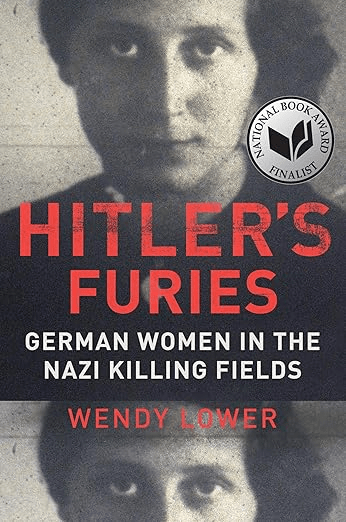
    A review of Hitler’s Furies: German Women in the Nazi Killing Fields

    As long as political ideologies seek to control the body and social lives of women, the personal will be political.

    I sometimes think it’s a trite and outdated phrase and then Roe v. Wade is turned over in the US and Nova Scotia announces an epidemic of intimate partner violence, and I’m reminded that in fact, no, the personal, the body, it is still political because men think it ought to be. Women have never asked for powerful men to make our bodies the site of moral imperatives and political objectives, to wield our bodies as the softer weapons of war.

    There is this idea that Nazism and Fascism uniquely appeals to men (there’s more Elon Musks than Laura Loomers in the world), and as a result, women were absent from the most terrible scenes of the crime (their domain children, kitchen, church), however we’ll learn how it was distorted and violent, all of it unbearably normalized, in Wendy Lower’s “Hitler’s Furies: German Women in the Nazi Killing Fields”.

    Originally published in 2013, Lower’s book is the result of twenty years of painstaking research into archives (notably in the post-Soviet Eastern Front), witness statements, and investigative work. It is chilling in the amount of everyday death and brutality Lower has catalogued and the straightforward way in which she has presented it all. Some critics at the time noted she did not include accounts of professional killers, like those in the Reich Security Main Office or SS, as mentioned in the linked Guardian article. I can appreciate the sentiment, but I think it’s even more sinister to consider the unending ‘normal’ and brutal ways regular women were part of the regime – secretaries shuffling files that sent hundreds to the death squads, after work ‘shopping’ for a new pretty dress in the discards of victims from the gas chambers. I am a regular woman, living a fairly regular life. Most of us are ordinary people, living ordinary lives and relying on the system and world around us to keep functioning as we expect. Their system slowly sped its way into destruction, those in power made substantial legal changes that eroded the entire known word and as we experienced through the pandemic, people still had laundry and a job and meals to make. The every day necessaries continue to exist. That’s a more unsettling and universal story.

    Wendy Lower first introduces the reader to what she calls the “lost generation”. Born in the tumult of Weimar Germany, with its blossoming civil rights, devastating economic and political turmoil and untold amounts of violence. There was as much promise, like Magnus Hirschfield’s Institute for Sexual Science and the women’s suffrage movement, as there was economic collapse and despair.

    This generation of women, disillusioned and morally lost according to Lower were perfectly primed to be swept into the National Socialist movement. The first two chapters of  “Hitler’s Furies: German Women in the Nazi Killing Fields” describes this environment and the perverse opportunity offered by the Nazis on the Eastern Front (as teachers, nurses and socials workers extolling Nazi “virtues”), notably once they’d made it impossible for women to find work they wanted. 

    The next three chapters describe the lives of six women sent to the Eastern Front and Lower ultimately divides the women between three categories: Witness, Accomplices, and Perpetrators. The most egregious actions were obviously taken by the perpetrators.

    There is something to be said for the women like Annette and Ingelene Ivens who were “exceptional after the war” (Lower, 89) for the ways they spoke publicly what they saw. They didn’t hide away their involvement in family chests and seek to hide behind their femininity, like so many of the perpetrators. They didn’t go to the Stasi after the war ended and trade secrets for their freedom.

    In the final chapter, “What Happened to Them?”, the answer is not much. White women, even women whose only power is the whiteness of their skin and their gender, have never been adequately punished for their murderous participation in things like the Third Reich or the murder of Emmett Till. The Guardian review accuses Lower of overselling her material, we know women can be violent and abusive, but we’re beyond it, and maybe that was the case in 2013, in the heady years of Obama, post-Sex in the City and Bridget Jones. But in 2024, 45% of white women voted for Trump. In his first days in office, he stripped away Diversity, Equity and Inclusion (DEI) programs that ensured employment for women and people of colour. Keep this in mind when you read chapter one of “Hitler’s Furies”. We’ve been seeing the rise of tradwife content which presents an idealized image of the mother who sacrifices all for the family. This idealized image, like that of Johanna Atvater in her crisp white apron, is a smokescreen. They don’t evolve much and only have one playbook. 

    Recommended to readers interested in women’s history, social history, World War II, German History and Fascism.

    I borrowed “Hitler’s Furies: German Women in the Nazi Killing Fields” from my local library.

    My recent reviews of women’s war experience can be found here: Devastating Minutiae in the Palestinian Experience: A Literary Review of Minor Detail

    Review of a Poet’s Memoir: Looking at Women, Looking at War by Victoria Amelina

    Did you know I’ve started publishing my own short fiction? You can find it over at Under the Poplar Tree on Substack. Be sure to subscribe, I publish a new short story every other Thursday.

  • Review of a Poet’s Memoir: Looking at Women, Looking at War by Victoria Amelina

    “What weapons do we choose to pursue justice in the hardest times?

    Victoria Amelina, Looking at Women, Looking at War

    The memoir “Looking at Women, Looking at War” is one writer’s journey to answer this question in the face of occupation and war. Victoria Amelina, children’s literature author and mother to a young son was confronted with this question on February 24, 2022 when Russia invaded Ukraine and her world was upended. The resulting memoir is her experience as a war crimes researcher and writer reconciling with her own identity and the “forever endangered Ukrainian culture”.

    An honest and intimate chronicle of her own experience, it is also of other extraordinary women in the resistance. Women like Evgenia, a prominent lawyer who were colourful clothing to court, but now carries a gun at the frontline. Oleksandra, her friend and mentor, who documented tens of thousands of war crimes and won a Nobel Peace Prize in 2022, though not one of her hundreds of cases went to The Hague in the seven years prior. The finer details like this sucked the air out of my lungs while reading. This book offers brilliant insight into the experience of women in and at war, but it is also contemporary evidence of Russia’s criminal attack on Ukraine. It is undeniable yet it continues.

    War is absurd and relentless and evil, a continuing slog of noise and death. Victoria Amelina captures the unspeakable despair and moments of joy that are the experience of war. It is an assault on the senses and in juxtaposition she writes of feeling disconnected and worn out. Body tired from the trauma and grief. Oleksandra tells her to take time and put cream on her face but to really feel it before she does anything else. How often do we do something similar? This sensory experience is a return to another time and a centring moment before she returns to recording war crimes and atrocities.

    This book could so easily be a litany of awful events pieced together, but it is instead a raw and lyrically beautiful account of a woman making her way in a world of war, attempting to create a path for justice. The awful things are alluded to but Amelina is a writer of grace and compassion, the reader can understand the allusions to violence and sexual assault without needing the details.

    The manuscript is unfinished. Victoria Amelina’s life was cut short by a Russian missile attack and she died on 1 July 2023. There are sentences left undone because of her death. Fragmented notes tell of awful Russian actions, like the small bit of a master’s work that could be seen on a FaceBook photo, posted by the Russian soldier who stole it Half of a sentence tells us about the death of a man miraculously rescued in another chapter. I had to stop reading and watch the crows in my favourite tree for a while after that. There is no ledger of fairness in war.

    Amelina reveals the bleak despair wrought by the violence of war and the fear of being close to death so that we can understand the small ways people are trying to retain their humanity in the face of war. The bag of walnuts a mother gives to Victoria after their interview. The reader is brought into the group of artists trying to save a snag beetle found on the sidewalk,their attempt to save an inconsequential life after the gut punch of learning about Volodomyr Vakulenko’s abduction by Russian forces. His death is a terrible thread woven through the novel and each time we are reminded that Amelina was writing about friends and colleagues. She is not simply an outside observer in this conflict.

    Reading this makes me consider what I would do if my country came under attack and I had to face the reality of war crimes and terror. Would I be brave and charge into the war zone to document the horrors done by the enemy? Would I find a sturdy basement and plead with my neighbours to find shelter with me? I should hope so, and I think we can hold on to what Victoria Amelina says here: “No choice made by those who want true justice is easy, and for most of us, the outcome of our battle is still unknown.” (p.10)

    Victoria Amelina’s roots as a storyteller can be found “Looking at Women, Looking at War”, evident as she set out to chronicle the lives of extraordinary women. In writing about the people in the embattled Donetsk region, we’re invited into her inner world and what made her courage necessary. Such is the cost of resistance.

    Recommended to readers who enjoy history and women’s literature. The memoir requires patience, broken sentences will never be fit together, we won’t ever have answers as to what she intended in some sections. The tragedy of war exists in these gaps. “Looking at Women, Looking at War” will be be published 18 February 2025 and available at all fine retailers and booksellers after that date.

    For further reading, check out Hunting for Vakulenko to read more about the poet and his abduction and murder by Russian forces. A murdered writer, his secret diary from the Guardian provides further context about Vakulenko.

  • Devastating Minutiae in the Palestinian Experience: A Literary Review of Minor Detail

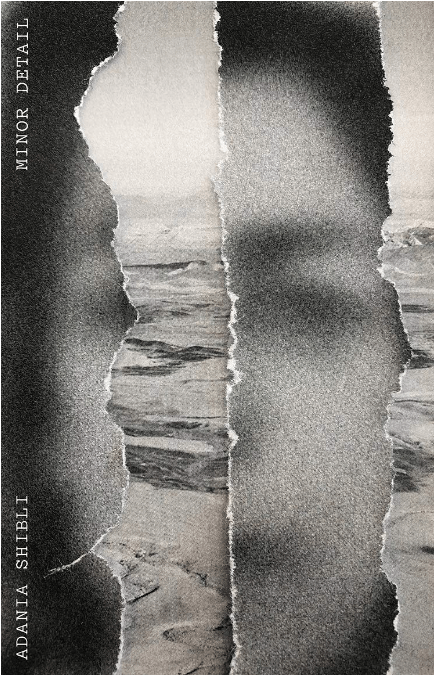
    Devastating Minutiae in the Palestinian Experience: A Literary Review of Minor Detail

    Recently, while combing the Libby archive, I came across the audiobook of “Minor Detail” by Palestinian author Adania Shibli, translated by Elisabeth Jaquette. “Minor Detail” immerses the reader into the summer of 1949, one year after the horrific Nakba where around 700, 000 Palestinians were displaced. In this already violent and oppressive environment, Israeli soldiers encounter a Bedouin encampment and proceed to kill the group of unarmed Arabs, except for one scared girl. The soldiers eventually kill this young woman and bury her in the sand of the Negev desert. Years later, in a present-day similar to our own, a young woman in Ramallah comes across a newspaper article about this terrible history and attempts to learn more about the crime, notable to her because it was committed exactly twenty-five days to the day she was born. This incredible fiction novel is a devastating look into the banal minutiae of life under oppression.

    The novel is divided into two equal parts. Part one is the narrative viewpoint of an Israeli army officer who has been sent with his men to lead patrols of the desert to ensure it is free of the nomadic Arabs who lived there. The soldiers find the Bedouin encampment and kill all the unarmed people and their camels, the oppressive heat and details of the blood seeping into the sand evoking a deep seeded, visceral discomfort with state sanctioned imperialism. It is from this encampment the soldiers take the unnamed Bedouin girl they will murder.

    Shibli very effectively builds tension and discomfort by constantly revisiting the exacting details of the officer’s infected spider bite on his leg, the measured ways he cleans his body each time he returns to his tent, the care he takes in dressing the wound and ridding his space of any other spiders. He is fastidious in cleansing away rot, within himself, his own troops and the desert. Shibli’s writing is very tightly wound in this section, the close heat and dank smells seem to rise up around the reader.

    The second section of “Minor Detail” follows a young, unnamed Palestinian woman after she encounters a newspaper article about the 1949 murder. She is drawn to the story and feels compelled to learn more about the crime and the victim. There’s a longish section where she muses about her own narcissism that is a bit much in its melodrama, reminiscent of a teenager’s navel gazing, but I think the overwrought language has more to do with translation than Shibli’s writing. There’s another passage that overuses the word “leaped”, to the point of distraction but again, some nuance and lyricism can be lost in translation. The rest of the writing is evocative and lyrical, in spite of the violence and cruelty that is sometimes depicted. 

    Our narrator is forced to navigate a land under occupation as Palestinians can only make their way around Israel in very controlled and contrived circumstances. In this way we see how the barren landscape, once it was cleared of nomadic Arabs, has been built up to be a very tightly institutionalized space. The chaotic violence of the Bedouin girl’s murder has given way to cities and countries in controlled zones with permits that are enforced with ruthless zeal. We experience the shifting borders of these controlled zones with the narrator as she switches between multiple maps in an attempt to plot a course through a land once hers but now marred by institutions that bar her entry.

    Shibli’s writing is subtle and poetic, with a magnetic pull into overbearing heat and tension. We know the violence takes place and we know it is brutal, but Shibli deftly carries the reader around and past the acute action of violence and into its aftermath. In this way, she is evoking that sultry heat of a sun-baked desert that throws up mirages and disorients the experience.

    The sexual assault and murder of the young Bedouin woman in 1949 is a true story, one small unbearable story in a terrible war. A devastating microcosm of the whole. This is the true, horrible beauty of Adania Shibli’s “Minor Detail”, each observation carefully and tenderly drawn out. Regardless of politics, recommend to readers interested in fine literature, perspective changes in fiction, women’s experience in writing. 

  • Books I Read in 2024 that Made an Impact

    The following, in no specific order, is a round of eight books I read in 2024 that made an impact on me. The phenomenal books on this end of year list are not all new releases, some are a few years old and one is considered a classic. There’s fiction and non-fiction alike, murder, sex workers and difficult women. It doesn’t even encompass the many books I read or listened to that I truly enjoyed. These are the books that immediately came to mind when I sat down to reflect on what made me say, shit, that was a great book, then stare ahead and absorb the words. Without further ado, the Eight Books of 2024 That Made an Impact (on me):

    Whores, Harlots and Hackabouts, Kate Lister: Sensational. I listened to the audiobook, narrated by Professor Lister, and she has a fantastic northern English accent that carries you into the history. She is thoughtful in addressing a really difficult subject, compassionate and uproariously funny. Sex work isn’t the oldest profession, as she argues in the book, but it is very old and it is one that is frowned upon unless you have the right economic status and pretty face. History is ridiculous and hilarious, but it’s also a rich resource for us to learn and Kate Lister is one of my favourite guides.

    The Five, Hallie Rubenhold: The first Jack the Ripper book I read was the famous narrative that put forward Queen Victoria’s grandson as the murderer. We had recently moved in with my grandmother and I had started raiding her bookshelves (also where I found a sensationalized account of the Black Donnellys). “The Five” is nothing like that 1970s pulp non-fiction, though Rubenhold does reference it in her very well-done book about the five victims of Jack the Ripper. She eloquently breathes life and some agency into these women who were brutally cut down, their memory intertwined with their unknown murderer for generations. You can find my review here. 

    Sinister Graves, Marcie Reardon: This is the third instalment in the Cash Blackbear series by Reardon. I discovered the first in her series, the award-winning Murder on the River, as a happy accident at the library. Cash Blackbear is an intriguing Native American woman with abilities to see things not of this world and she assists a local police officer, who has also become her mentor and only family. Book four in Reardon’s series is coming out in 2025, so I’m looking forward to that!

    Parable of the Sower, Octavia E. Butler: Absolutely quintessential and necessary reading for anyone who is interested in speculative fiction and post-apocalyptic stories, but also philosophy and the human experience. Butler is an absorbing writer, her broken world, before it became that way, is unsettling in how familiar it is, but that is why post-apocalyptic storylines work so well. They are both a cautionary tale and a horror that could never happen. 

    Difficult Women, Roxane Gay: A powerful, painful and beautiful collection of short stories. Roxane Gay is a professor, editor, social commentator (from Twitter to the New York Times) and writer. This collection is raw and spectacular, it reveals bits and pieces and of what makes us whole.

    The Wife Between Us, Greer Hendricks and Sarah Pekkanen: A slow burn psychological thriller, “The Wife Between Us” is a great read as the weather chills and you have the opportunity to sit snuggled up by a fire. The storyline takes us back and forth between Vanessa, the scorned ex-wife of Richard, and his new fiancée Nellie. The women’s lives are intertwined in ways the reader would never expect. 

    Calling My Deadname Home, Avi Ben-Zeev: I loved this incredible memoir by Dr. Ben-Zeev. An honest and very loving look into the life of a trans man trying to heal himself and the journey with his family and loved ones. You can read my review here

    As 2024 unravelled and unfurled into whatever will come in the next year, these books were more than just stories. Each brought its own wisdom, touch of magic and introspection, growth and tears, which is a testament to the formative power of reading. A well-told story can change how you see the world. 

    What were books that impacted you the most this year? Share your favourites below in the comments, I’d love to hear other readers’ reflections and recommendations.

  • Medieval Thoughts on Gender: Review of Eleanor Janega’s “The Once and Future Sex”

    I’ve wanted to read “The Once and Future Sex: Going Medieval on Women’s Roles in Society” for quite a while and I’m glad I did! I It’s a fun and historically exacting romp by historian and broadcaster, Eleanor Janega.

    In it, she explores the multiple roles of women in society and the ever changing perceptions of beauty and women’s bodies, labour and intellect. Dr. Janega dispels the idea that time is on a linear course from the “dark ages” and illiteracy to enlightenment, space travel and human rights.

    Being a human is messy business and I’m more likely to ascribe to the notion of societal values existing on a sort-of pendulum that swings back and forth, bringing us forward towards equity and justice a little more with every swing. Even when it feels that we’re moving backwards, there’s always something fighting to keep us from going too far back. “The Once and Future Sex” explores that swing over the last 1000 years and the changes it has made throughout history in Western Europe.

    This is an approachable history book, presented in a very straightforward way for the average adult reader. In the appropriately named chapter one, “Back to Basics”, Janega goes over ancient human history and the great ol’ boys who created our now familiar concepts of science, knowledge, and existence. Notably, Aristotle and Plato who knew nothing about women nor did they want to, which is why everyone believed in brain semen and floating wombs for so long. They and their ilk were responsible for many treatises, diatribes and general asshattery about women and their nature, the essence of being a woman (as if the essentialism wasn’t enough),and one though-line of it all is that women are somehow inferior. 

    Medieval thinkers used the ancient scholars as their baseline to understand women and as Janega points out, “when it comes to sex differences, the ideas of a core group had an outside influence on medieval thought.”  How disastrously familiar as we see our neighbours to the south become beholden to the whims of evangelical Christians bent on manhandling the healthcare system with superstition and fear. In this way, our society continues to hold on to the motherhood requirement in order for women to be considered a proper woman. The value of class and wealth continues to be displayed on women’s bodies but instead of small apple breasts and a soft belly (the medieval ideal), women are to bear children then show no sign of it,with a tight stomach and perky, ample breasts. How a woman spends her time and money is reflected on the body. 

    We’re able to make choices about our bodies and our lives, obviously in comparison to medieval women, but I think we continue to carry the burden of a society built on taking that choice away.

    An engaging read, Dr. Janega is the type of historian who is able to bring all the nuance, quirks, and weird bits of history alive. She dispels multiple myths about the medieval time period, those poor folks didn’t have germ theory and they were trying their best. She gives careful consideration and represents all classes of society. Lower and middle class women are most often found in legal records, not everyone was a fancy gal in King Henry’s court.

    I listened to the audiobook version, narrated by Samara Naeymi and she is great at conveying Janega’s writte nemphasis and wit. Dr. Janega has an irreverent sense of humour. Her irreverent voice is well on display in the Once and Future Sex (especially if you’re family with her History Hit podcast, Gone Medieval). 

    A note about use of binary language – such is the nature of discussing sexism throughout history. This is not to say that queer, intersex and gender non-conforming folks didn’t exist, but if they barely understood cis women, today’s discussion on gender identity would send the average medieval person into some knots.

    Recommended Reading

    Definitely recommended to fans of history, gender studies and anyone looking to dunk on Plato, feminism, medieval history, or the experience of being a woman.

    Best suited for adult readers at or above college reading level.

  • A World of Lies: Review of A Short History of the World in 50 Lies

    A quick and interesting read, I’m delighted I immediately tracked down and read  “A Short History of the World Told in 50 Lies” after I heard Natasha Tidd’s interview with Dr. Cat Jarman on the History Hit podcast Gone Medieval (it’s from the back catalogue in the series).

    The fifty stories are told in chronological order, beginning with an ancient king lying his way to the throne and ends with the relatively recent Chernobyl Disaster.

    It’s an unsettling truth that “fake news” is not a new phenomenon, created out of nothing by Trump and his ilk. Apparently Julius Caesar was one of the first to give the spin doctors a go, and it’s been a heavily entrenched practice ever since that the powerful lie and get away with it, typically only felled by their own hubris.

    Some of these lies have held on for longer than anyone could have imagined, the sort of conspiracy-laden shit the far right will peddle to sow fear and mistrust. There’s something exceptionally depressing that the story Simon of Trent, a twelfth century blood libel case, resurfaced once again only a few short years ago.

    Tidd accounts the tragic story of the Tuskegee Experiment that continues to have an impact on Black Americans, to the adventure and might of Jeanne and her Black Fleet sailing the English Channel on her mission of revenge. 

    Recommended Reading Level

    A very approachable read, “A Short History of the World in 50 Lies” is the perfect vacation read for history buffs, a general audience who wants to know a little bit about a lot. Natasha Tidd’s voice is friendly and I definitely recommend!

  • A Compassionate Examination: Book Review of “The Five” by Hallie Rubenhold

    The Jack the Ripper case is likely the most notorious series of murders in history, adapted into countless reproductions and theorised on endlessly, but in historian Hallie Rubenhold’s “The Five: The Untold Lives of the Women Killed by Jack the Ripper”, we are presented with the humanity and and heart wrenching accounts of the victims instead of another sensational drool over the bloody murders. Rubehold’s work is a devastating and intimate portrayal of these women’s lives and the ways the system, what it was of workhouses and meagre pensions paid in a husband’s name as long as he was alive, was not one made for women. Rubenhold effectively strips away the spectre of the notorious Jack the Ripper to provide us with an intimate portrayal of the victims’ devastating lives. 

    Photo by cottonbro studio on Pexels.com

    Rubenhold tells the complete story of each woman’s life, from birth to death, as much as it can be known and in so doing she is able to present whole women. “The Five” opens with the first victim, Polly, the infamous drunk, but we learn she was more than that – she was a wife and mother,  a woman who would never have been killed if the justice woman allowed a woman to divorce her husband because he was sleeping with the neighbour.  Her options were to stay, her husband and his girlfriend openly having a relationship in front of her, or leave to the workhouse. Her children would have to stay behind. We forget what it means to have no options.

    We’re often more concerned with hearing the gory details of the murder instead of the lives lived by the victims, this is the issue with most true crime content. Rubenhold deftly guides the reader to the most likely moment the victims encountered their killer, but there are no violent, bloody details of the murder. 

    Each account tells the story of how it doesn’t take much to derail a woman’s life. The most vulnerable have always been those who are one illness, one traumatic event, one death, away from homelessness. Rubenhold shows us over and over again, through these five women, what it means not to protect them.

    Recommended for readers interested in history, women’s experience, and true crime that is approached ethically and without judgement or sensationalism.

    Additional resources on this case include the Jack the Ripper miniseries by History Hit podcast, After Dark: Myths, Misdeeds, and the Paranormal. Anthony and Maddy provide a close examination of the most likely suspects in the Jack the Ripper murders. Much like the women, these men were on the fringes of society in their own way (save the Prince).

  • The Rape of Nanking: The Forgotten Holocaust of World War II

    A review of Iris Chang’s “The Rape of Nanking”.

    The “Rape of Nanking” by Iris Chang, first published in 1997, remains a pertinent and disturbing read to this day. Researched for over two years, Chang recounts the devastating Nanjing massacre (1937-1938) by the Imperial Japanese army, during the Sino-Japanese war between the Republic of China and Imperial Japan. Nanjing was the capital of the Republic of China during this period. 

    Aerial view of a cave with water swirling into it.


    This was an incredibly painful and dark time in Japanese history – one they had only started to address when Iris Chang published “The Rape of Nanking” (Murayama Statement, 1995). The pervasive silence is what drew Iris Chang to research and eventually write “The Rape of Nanking”, as well as her own parents exile from China – their route took them through Taiwan to America. 

    Little research had been done until that point, at least not anything remarkable that would hit mainstream media and Chang was acutely aware that survivors were growing old and dying. So, she began to research and devoted the next two years of her life to learning everything she could about the mass murder of Chinese civilians at Nanjing.

    The “Rape of Nanking” is divided into three main sections: The first narrates the mass murder of Chinese civilians from multiple viewpoints (the Japanese military, the Chinese victims, and the Westerners who desperately tried to help civilians), the second part covers postwar reaction to the massacre, and the third examines the factors Chang believes led to the massacre.

    Chang writes with a strong and precise voice – her own personal horror is evident as she provides factgual accounts that are unsettling in their ordinariness. It was as though the soldiers murdered by rote, their movements methodical as they cut down civillians and exacted devastating amounts of sexual violence. Criticism at the time of its publication pointed to Chang’s evident personal bias, her limited research experience as she wasn’t a trained historian; and I wonder how much of that criticism was heightened by her 2004 suicide. Her husband, Bretton Lee Douglas, address Chang’s deteriorating mental health and suicide in a newly added section for the new edition and he addresses both her experience as a researcher and a family history of mental illness. Reading this book so long after any contemporary criticism, it feels macabre to comment but also naive to think one wouldn’t be impacted by researching the evil actions of fellow human beings. There’s only so much objective reporting one can do when writing about an elderly woman raped to death.

    In the epilogue, Change writes of a contemporary conflict, “the international response to the Nanking atrocities was eerily akin to the more recent response to the atrocities in Bosnia-Herzegovina and Rwanda: While thousands have died almost unbelievably cruel deaths, the entire world has watched CNN and wrung its hands.” (Chang, 2014, p. 364). Except now we watch Instagram reels and TikToks of Palestinian parents carrying their dead children. 

    This isn’t a political blog in so much as I don’t write about politics, but the personal is always political because we are people living and existing in a political system. Human beings don’t change very much, history will tell you that, no matter how much time passes, there will be people who do awful things, and people like Minnie Vautrin who try to save people from awful things, and there will be people like Iris Chang who seek to retell these stories so they are not forgotten. 

    I read this while staying at a cabin on the south shore of Nova Scotia with my youngest child. There is some safety in reading about the atrocities of the human condition while surrounded by nature’s beauty. “The Rape of Nanking” is a good (English language) read to have a broad understanding of the events that led to the massacre and remains relevant to this day. Readers interested in World War II history (as this is adjacent), history, and China would find this a valuable read.

    View of a white sailboat                                        through a cave, The sky and ocean are both tinged grey.