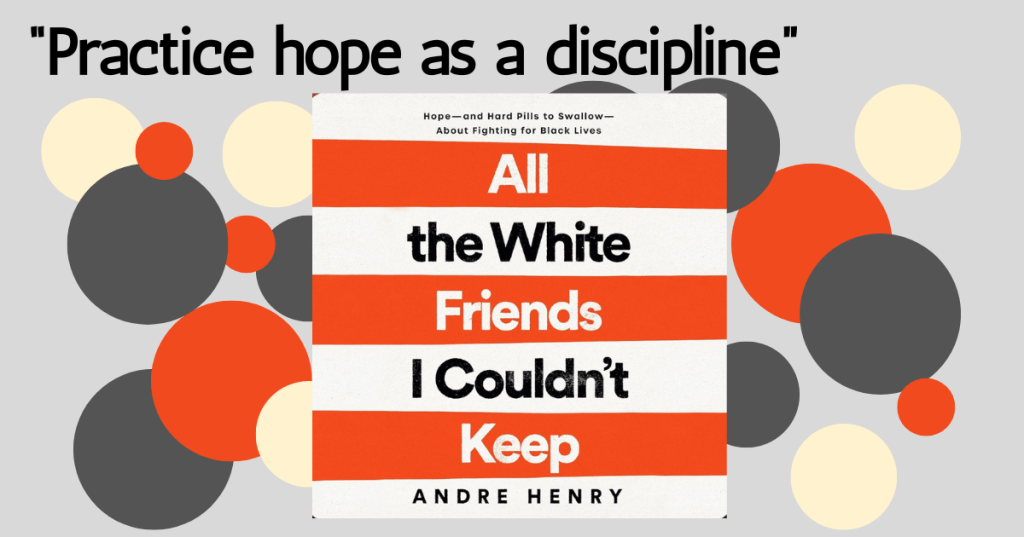
I recently encountered “All the White Friends I Could Not Keep” by Andre Henry (I listened to the audiobook version he narrated). It is an uncomfortable, painful and necessary read as Henry explores race, activism, and the philosophy and action of nonviolent political protest and the growth he experienced during this journey. But it is also the story of the many painful ways his white loved ones chose to react to his awakening.
Andre Henry grew up in Stone Mountain, Georgia, “under the shadows of Confederate Mount Rushmore”. He was studying theology, on course to a career in evangelical faith leadership when Philando Castille was unjustly murdered by Minneapolis police officers. This triggered a deep emotional awakening for Henry, one that saw him shed his Evangelical faith and lose friends and loved ones who were unwilling to accept the anti-racist, proud Black man standing before them, demanding they see and hear him and every other Black person crying out.
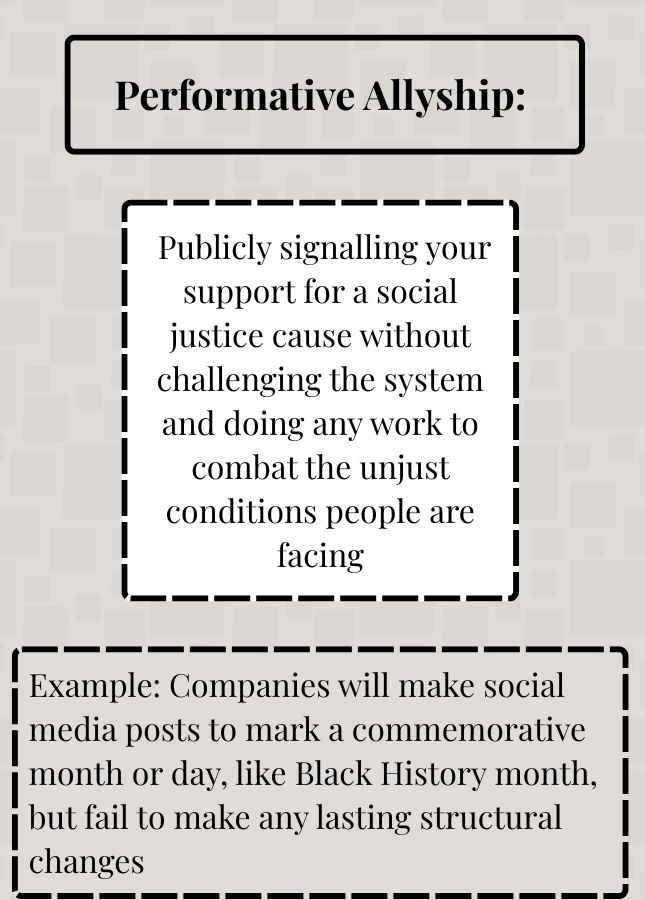
If we know something we are doing is harmful and aligns us with racist views then we have a moral obligation to act and to change our behaviour. Reading “All the White Friends I Couldn’t Keep is one of those actions I think we, as white people, can take to understand and change the way we are interacting in the world so that it is anti-racist and intentional. This memoir-manifesto is a vulnerable look into the innermost feelings and reactions of Henry to his white friends’ actions. It is a rare opportunity to learn and understand directly what performative allyship means and the impacts it has on people.
Some of it is going to be a difficult read. It should be. It’s hard and painful to hear that the way you are showing up in a relationship is not working and it’s hurting someone you care about. Not only that, it’s because of your deeply held beliefs. That’s hard, uncomfortable and frightening. I felt shame, understanding, frustration and sadness as Henry described, with grace and a lot of love, his relationship with the Stone family and the eventual breakdown of it. I grew up in similar evangelical circles and there is nothing a white Evangelical, happy clappy Christian loves more than a token project to fuss over and hold up as evidence of their moral superiority (Look! I helped a Black person! I don’t see colour! I’m very capital-g Good).
There’s my bias and frustration.
Andre Henry describes and dismantles the relationship between formal, White Christianity (and White Jesus), much better than I can. He has a very different take on how he has reconciled his personal faith and how I have chosen to step out and away from the tradition. I don’t think a god is necessary to your spirituality, faith, or morality. Frankly, I wouldn’t typically have read something by a faith leader but I am actually happy I did. I have little patience for formal, Western religion, in large part because of the white supremacy and gross amounts of damage done to this world and directly to people I love. That is my unconscious bias.
But.
Henry tries to figure it out instead of stepping out of it. That’s an increasingly difficult thing to navigate but I think he comes to articulate and understand faith in a more realistic and just way than he did when he was in theology school.
Henry’s musical voice shines through and it was a special pleasure to listen to him narrate “All the White Friends I Could Not Keep”. To truly engage and hear what Henry is saying, readers will have to drop their inner defences and be open to absorb and reflect. It is like a welcoming sermon from an old friend.
Recommended Reading Level
Recommended to a general audience, though Andre Henry discusses violence face by BIPoC people, it is not gratuitous or descriptive. I don’t think an academic background is required, but I do think there are chapters that would work very well in a classroom of upper level high school to college level (of note, Chapter 5: We Do Not Debate with Racists and Chapter 10: How to Be Hopeful).








 Joy Reads Books