I recently listened to the audiobook of Spy Princess by Shrabani Basu, narrated by Shiromi Arserio. It tells the short and remarkable life of Noor Inayat Khan: SOE spy, poet, children’s psychologist, sister, and daughter. Heartbreaking and resilient, I first encountered Noor in “The Spy Who Wouldn’t Lie”, part of the The Spy Who … podcast series.
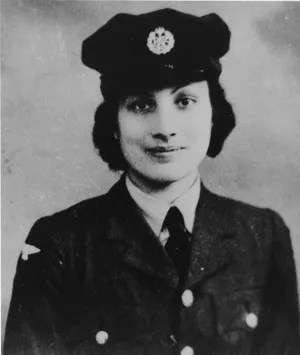
Spy Princess opens with Noor’s train journey to Dachau. A cold open that leaves no doubt about her fate. You can brace so your heart doesn’t feel hollow but the stark reality is that Nazis brought death and callous execution wherever they went.
I am taken by the story of this young woman who consistently chose bravery and honesty in the face of appalling violence and risk. She was raised in the Sufi faith, a mystical branch of Islam that prioritizes meditation and exploring the personal dimensions of one’s spiritual faith and relationship with God. Her father, Inayat Khan, was a mystic and musician who brought the faith and his classical music across Russia and into France and England. Her mother, Ameena Begum, was a poet and American-born who immersed herself in her life with Inayat and their children. Noor was the eldest of her siblings and very close to her parents. Basu readily captures the closeness of her family and the sense of responsibility each member felt to one another. There are bits and pieces written between the lines of these relationships that a modern reader might read as difficult and trouble but as an historian, Basu does not speculate into any of those elements and instead focuses on the positive ways Noor’s complex family relations shaped her into the quietly brave person she became.
Born in Moscow in 1914, Noor had the kind of international upbringing, the British will call eccentric when she joins the service – living in France and Britain with a large extended family of musicians and faith leaders.
The British Empire, under which she served, was beginning to crumble at this time and India was pushing hard for its freedom. The politics of serving under the crown as a woman of Indian-descent were complicated but I think Noor’s honesty and the way she lived her ethics made it possible. If she had lived, her loved ones believe Noor would have turned her attention toward the Indian independence movement.
Noor’s life comes to an awful end but Basu does not have the reader dwell on it. There are questions that remain, mostly because there are always questions about what happened during a war and we have to rely on the word of the Nazis who killed her, corroborated by their other victims who watched Noor go to the place of her death.
Listening to the audiobook was a pleasurable experience and I think Basu’s writing – especially admiration for Noor, is best suited to this format. There were times it would have been tedious as she returns again and again to Noor’s gentleness and her father’s influence and care. It is as if there’s a glow around Noor that Basu is conscious of not tarnishing. Basu is telling the story of someone she greatly respects.
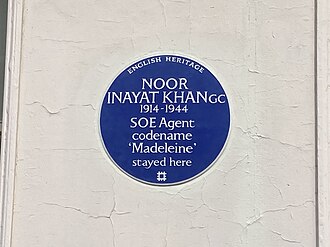
Arserio’s restrained narration is warm, she captures the care Basu has infused into her writing without delving into overwrought emotion. Appendix IV: Indians Awarded the Victoria Cross and George Cross 1939-1945 is especially affecting and feels like a proper memoriam taking- place. Hearing their names read aloud is uniquely powerful when considered against the backdrop of the rising Indian independence movement. These men and women fought on behalf on the empire when their own country was pushing for freedom.
I would recommend Spy Princess to readers interested in women’s history, the Second World War, the history of espionage, and women’s experience during war. Check out my reviews of Iris Chang’s The Rape of Nanking and Wendy Lower’s Hitler’s Furies: German Women Unleashed in the Nazi Killing Fields for more books about the Second World War and the impacts across the world.
I’ve also reviewed Victoria Amelina’s stunning memoir Looking at Women, Looking at War, about women’s experience in the early years of the current war in Ukraine.